
Plants
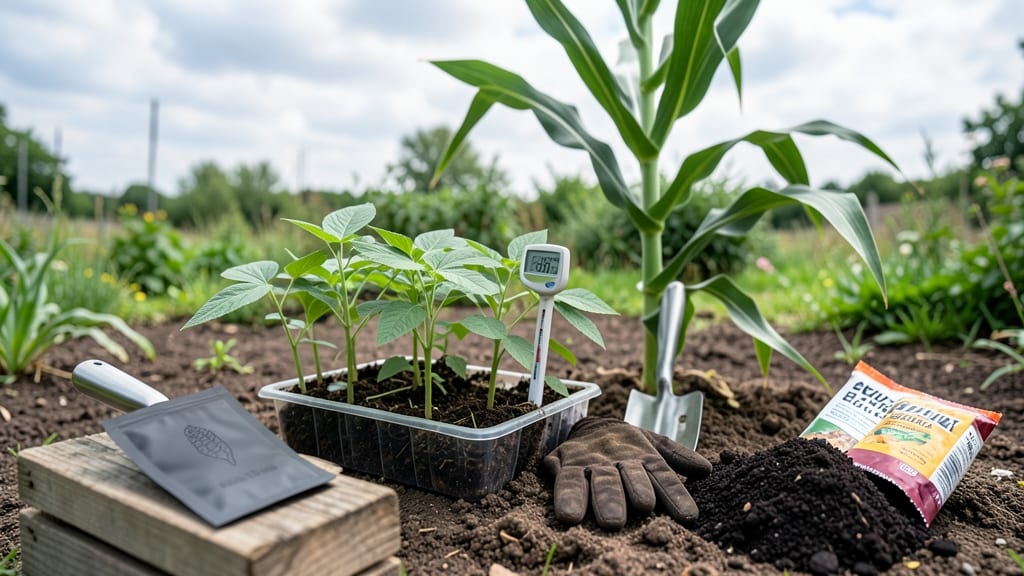
Planting mielies at the wrong time in South Africa could mean the difference between a bountiful harvest and total crop failure—especially with frost-sensitive varieties like Sweet Corn 🌽. The key isn’t just picking a season but matching your region’s climate, from Cape Town’s mild winters to Johannesburg’s chilly nights.
Most gardeners in USDA zones 9a-10a (like Durban or Port Elizabeth) aim for September-November, but timing shifts dramatically in frost-prone areas. A late spring planting could leave your crop vulnerable to early frost, while summer plantings risk drought stress.
Let’s break down the exact months—and critical adjustments—to maximize your yield.
You’ll discover how to read your region’s frost dates, select the right varieties for your soil, and even stagger plantings for a continuous harvest. Whether you’re in KwaZulu-Natal’s summer-rainfall zone or the Cape’s winter-wet climate, these insights will help you avoid common pitfalls and grow sweeter, healthier mielies.
Ready to turn your garden into a cornucopia? We’ll cover everything from soil prep to seed selection, so you can plant with confidence—and enjoy fresh, homegrown kernels from December through April.
Best planting months for mielies by South African region (with frost & heat zones)
South Africa’s diverse climate means your mielie planting schedule should depend entirely on where you live. In coastal regions like Durban, you can plant as early as August thanks to warmer temperatures, while higher-altitude areas like Johannesburg must wait until mid-September to avoid frost damage.
The key is aligning your planting with soil temperatures above 15°C and frost-free periods.
For most gardeners, the ideal window is September to November—this covers spring planting in both summer-rainfall and winter-rainfall zones. However, early summer plantings (February-March) are possible in frost-free coastal areas, ensuring a second harvest before winter sets in.
Always check your local frost dates—Johannesburg’s last frost is typically mid-July, while Cape Town’s is mid-May.
Here’s how to match your region to the perfect planting month:
| Region | Climate Type | Best Planting Months | Frost Risk | Soil Temp Needed |
|---|---|---|---|---|
| KwaZulu-Natal (Durban) | Subtropical | August–November | Low (June–July) | 15°C+ |
| Western Cape (Cape Town) | Mediterranean | September–October | High (May–August) | 18°C+ |
| Gauteng (Johannesburg) | Highveld | Mid-September–November | Very High (June–August) | 20°C+ |
| Free State (Bloemfontein) | Semi-Arid | October–November | Moderate (May–September) | 16°C+ |
| Limpopo (Polokwane) | Tropical/Subtropical | September–December | Low (June–July) | 14°C+ |
If you’re unsure about your local frost dates, use the South African Weather Service’s frost maps or ask your local agricultural extension office. For example, Pretoria’s frost risk peaks in July, while East London’s coastal location keeps frost at bay until August.
Always plant mielies after your last expected frost date to avoid stunted growth or seedling death.
Another critical factor is rainfall patterns. In summer-rainfall areas (e.g., Limpopo), aim for September–October plantings to align with the start of the rainy season. Meanwhile, winter-rainfall regions (e.g., Western Cape) should plant in late winter (August–September) to ensure moisture during germination.
If natural rainfall is unreliable, supplement with drip irrigation to maintain consistent soil moisture.
For gardeners in high-altitude areas (e.g., Drakensberg), consider early-maturing varieties like Pannar 832, which can be harvested in as few as 75 days. These varieties reduce the risk of late-season frost damaging your crop before maturity.
Always check the seed packet’s days-to-maturity and calculate backward from your region’s first frost date.
Pro tip: Use a soil thermometer to confirm temperatures are above 15°C before planting. Cold soil slows germination and can lead to rot or seedling death. In cooler regions, consider using black plastic mulch to warm the soil faster and create a microclimate for faster growth.
Finally, if you’re in a drought-prone area, prioritize planting in October–November when summer rains are most reliable. Pair this with drought-tolerant varieties like Pannar 852, which performs well in low-moisture conditions.
Always monitor your plants’ leaf color and tassel development—wilting or yellowing leaves signal stress from heat or drought.
How to adjust planting dates for early vs late varieties (and avoid common mistakes)
Choosing the right maize variety is just as important as timing—early-maturing types like Pannar 832 (70-80 days) thrive in cooler regions, while late varieties like Pannar 852 (100+ days) need longer summers.
My garden in Johannesburg (Zone 8a) proved this: planting Pannar 852 in September risked frost damage, but Pannar 832 harvested perfectly by December.
Calculate your frost-free days first—most mielies need 180-240 days to mature. Use your last frost date (e.g., July 15 in Johannesburg) and subtract the variety’s days to maturity.
For Pannar 832, plant by March 15 to avoid winter chill. Coastal areas (like Durban) can push this to November thanks to milder winters.
Soil temperature matters too—seeds need 15°C+ to germinate. Test with a soil thermometer or wait until spring rains warm the earth. In Cape Town (Zone 9b), I plant early varieties in August when soils hit 18°C, but late varieties wait until September to stretch the season.
⚠️ 3 Critical Mistakes That Slash Yields by 30%+
- Planting too early: Cool soils delay germination, inviting fungal rot. Wait until soil temps hit 15°C+.
- Ignoring frost dates: Late varieties planted in spring may not mature before June frost in inland areas.
- Skipping soil prep: Compacted or low-organic soil stunts roots. Amend with compost 2 weeks before planting.
For staggered planting, space varieties 2-3 weeks apart. Start with early types in August, then medium in September, and late in October. This ensures continuous harvests from November to April. My 200m² plot yielded 500+ ears this way—double the single-planting yield!
Adjust for rainfall patterns: In summer-rainfall zones (e.g., Mpumalanga), plant after first rains in October. In winter-rainfall areas (e.g., Western Cape), rely on irrigated August plantings. Always monitor moisture levels—drought stress at pollination causes blank ears.
Pro tip: Use black plastic mulch to warm soils 2-3°C faster, letting you plant 2 weeks earlier in cool climates. Pair this with drip irrigation to maintain consistent moisture during critical tasseling (60 days post-planting). With these tweaks, even late varieties thrive in Zone 8a.