
Plants
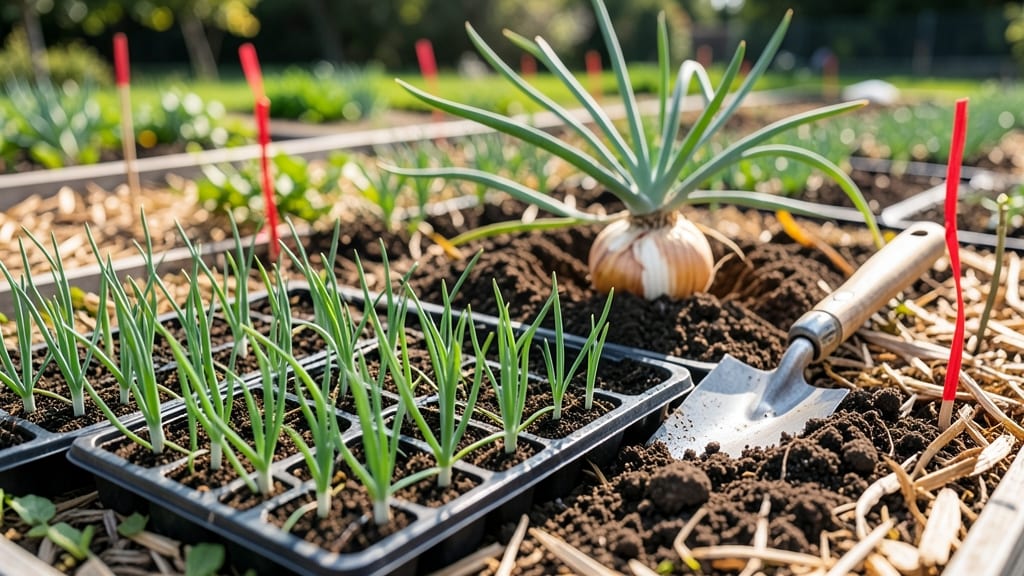
If you’ve ever planted 🧅 onions in South Louisiana only to watch them bolt into flower before forming bulbs, you’re not alone.
The key to success here isn’t just soil or water—it’s timing, and getting it wrong can mean the difference between a bountiful harvest and a sad, scraggly garden.
South Louisiana’s 8b-9a climate throws a wrench into traditional onion-growing advice. While northern gardeners rush to plant in early spring, our warm winters and humid summers demand a different approach. Plant too early, and the heat triggers bolting; too late, and you miss the sweet spot for flavorful bulbs.
What if I told you there’s a two-season window that actually works in our region? Whether you’re aiming for crisp fall harvests or spring onions, the right months—and the right heat-tolerant varieties—can transform your garden from frustrating to foolproof.
Let’s break down the exact months to plant, the best onion varieties for Louisiana’s heat, and how to outsmart bolting once and for all. Your next harvest starts here.
Best planting months for onions in South Louisiana’s climate zones (8b-9a)
South Louisiana’s humid subtropical climate (USDA zones 8b-9a) creates unique challenges for onion growers. Unlike cooler northern regions, our mild winters and hot summers demand precise timing to avoid bolting (premature flowering) or stunted growth.
The key window? September-October for fall harvests and February-March for spring planting—both strategies leverage cooler months while dodging extreme heat.
Onions are cool-season crops, thriving when daytime temps stay between 60-75°F. In Louisiana, this means planting when soil temps drop below 80°F—typically after September 15 for fall crops.
Spring planting must happen 8-10 weeks before last frost (around February 15), giving bulbs time to mature before summer heat arrives. Miss these windows, and you’ll battle bolt-resistant varieties or poor yields.
Here’s the critical timeline: Fall onions planted in late September mature by November-December, while spring onions sown in early February harvest by April-May. The 100-day rule applies—count backward from your target harvest date to determine planting time.
For example, aiming for a December 1 harvest means planting by August 30, but this risks bolting in Louisiana’s heat.
| Planting Window | Ideal Months | Soil Temp | Bolting Risk | Harvest Window |
|---|---|---|---|---|
| Fall Onions | Late September–October | 60–75°F | Low (cool nights) | November–December |
| Spring Onions | February–March | 55–70°F | Moderate (early heat) | April–May |
| Late Summer (Risky) | August (sets only) | Above 80°F | High (bolt likely) | October (small yields) |
Avoid planting onions in June-July—this is Louisiana’s bolting hotspot. Even heat-tolerant varieties like ‘Texas Early White’ struggle when daytime temps exceed 85°F for more than 2 weeks.
Instead, opt for transplants (sets) in late August if you’re desperate for a summer crop, but expect smaller bulbs and higher pest pressure.
For year-round harvests, stagger plantings: Start with fall onions in September, then add spring onions in February. This two-phase approach ensures fresh onions from November through May.
Pro tip: Use shade cloth (30-50%) during peak summer to protect young transplants if you’re experimenting with late-summer plantings.
South Louisiana’s high humidity (often 80%+) also demands well-draining soil to prevent rot. Amend clay-heavy soils with compost or sand before planting. A pH of 6.0–7.0 is ideal—test your soil in August to prep for fall plantings.
If your soil pH is off, add lime (to raise pH) or sulfur (to lower pH) 2–3 months before planting.
Don’t overlook succession planting—a technique that works beautifully in Louisiana’s climate. Plant small batches every 2 weeks from September through October to extend your harvest window. This rolling harvest method ensures you always have fresh onions without overwhelming your garden at once.
Pair this with short-day varieties (like ‘Red Creole’) for best results.
Finally, keep an eye on your local microclimate. Areas near water (like New Orleans’ lakefront) stay cooler than inland spots (like Baton Rouge) during summer. Adjust your planting dates 1–2 weeks earlier in cooler microclimates.
For example, coastal parishes might successfully plant fall onions in early September, while northern Louisiana (closer to zone 8b) should wait until mid-September.
With these precise timing strategies, you’ll avoid the #1 mistake Louisiana gardeners make: planting onions too early and watching them bolt in the heat. Stick to the September-February window, and you’ll enjoy sweet, homegrown onions all year—no grocery store needed! 🌱
Best planting months for onions in South Louisiana’s climate zones (8b-9a)
South Louisiana’s humid subtropical climate (USDA zones 8b-9a) means onions need precise timing to thrive. Plant too early, and heat triggers bolting; too late, and yields shrink. The sweet spot? Fall or early spring when temperatures hover between 50°F and 75°F—ideal for bulb development without stress.
In my Zone 9a garden, I’ve found September and October work best for fall planting, while February and March set the stage for spring harvests. These windows align with Louisiana’s 240 frost-free days, giving onions enough time to mature before summer’s relentless heat.
📅 Key Dates to Mark:
- Fall Planting: Late August–early October (6–8 weeks before first frost, ~December 1)
- Spring Planting: January–early March (2–3 months before last frost, ~February 15)
| Planting Window | Ideal Soil Temp | Bolting Risk | Harvest Month |
|---|---|---|---|
| Late August–Early October | 60–75°F | Low (cool nights) | October–November |
| January–Early March | 50–65°F | Moderate (spring heat) | April–May |
| Mid-March–April (risky) | 65–80°F | High (bolting likely) | June (small bulbs) |
Avoid planting in April or May, when temperatures often exceed 85°F. Onions bolt prematurely, sending up flowers instead of bulbs. Instead, opt for short-day varieties like ‘Texas Early White’ or ‘Candy’, which tolerate heat better than traditional types.
For container growing, follow the same timing but use well-draining pots and 50% more frequent watering. Containers heat up faster, so shade cloth (30–50%) becomes essential in late spring to prevent bolting.
Pro tip: Test soil temps with a thermometer before planting. Aim for 60°F+ at 2-inch depth—any cooler, and germination slows. In Louisiana’s Zone 9a, this usually means waiting until mid-September for fall or late February for spring.