
How To
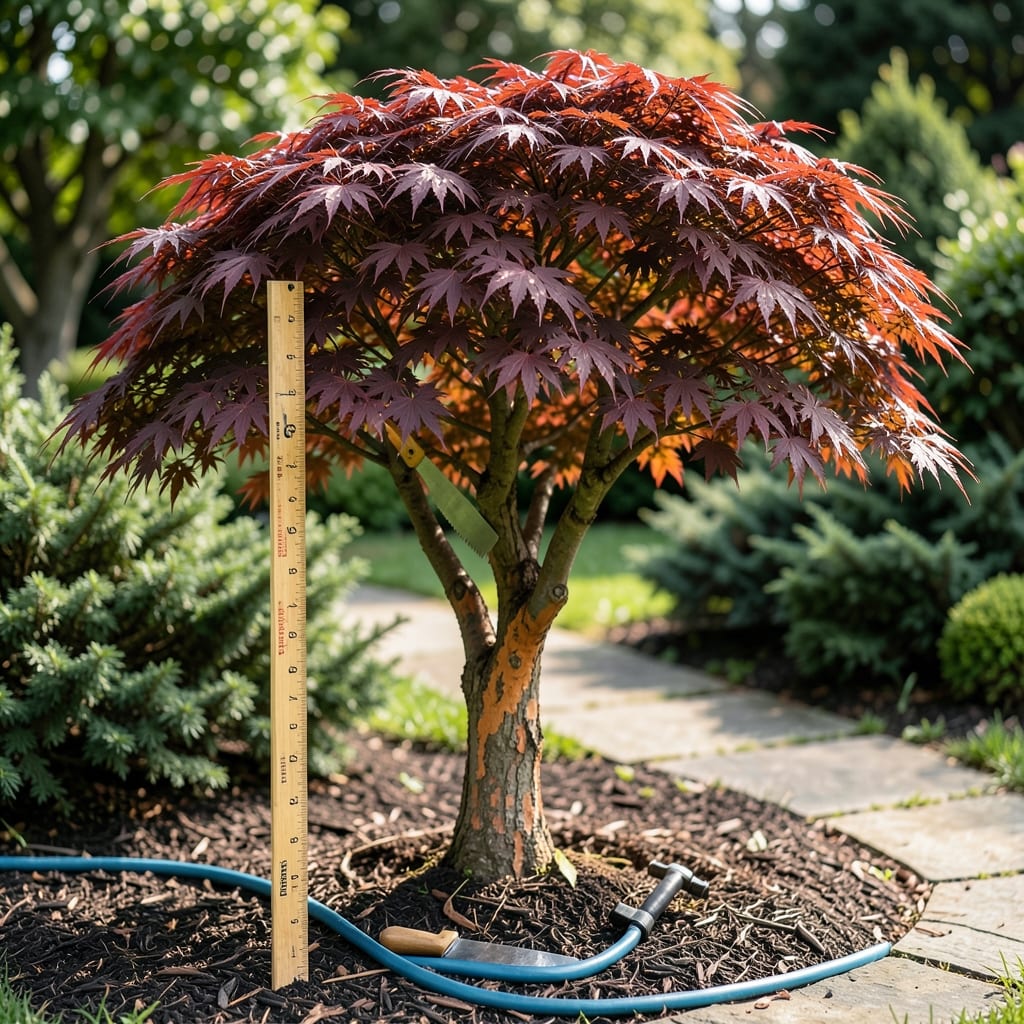
If you're wondering how tall can a Japanese Maple tree grow, the answer might surprise you—because this stunning 🌳 can range from a compact 6-foot shrub to a majestic 30-foot giant, depending on the variety you choose.
Picture this: a delicate 'Bloodgood' Japanese Maple adding drama to your garden with its deep red leaves, or the towering 'Emperor I' creating a grand focal point in your landscape. The difference between these two isn't just height—it's about the space you have and the vision you're creating.
But here's the secret most gardeners miss: with the right pruning techniques and growing conditions, you can actually influence how tall your Japanese Maple becomes. Whether you're working with limited space or dreaming of a backyard canopy, understanding these factors will help you shape your tree's future.
Let's break down the height ranges by variety, the care secrets to control growth, and how to pick the perfect Japanese Maple for your garden—no matter how big or small your space may be.


Japanese maple tree height by variety: small to giant size ranges
Japanese maples (Acer palmatum) are famous for their stunning foliage and graceful forms, but their mature height can vary dramatically—from 6-foot dwarf varieties to towering 30-foot giants. The key to choosing the right tree for your space lies in understanding these size ranges and how they translate into your garden's layout.
For example, the 'Bloodgood' cultivar typically reaches 20–25 feet at maturity, making it ideal for medium-sized yards, while 'Emperor I' can soar to 25–30 feet, perfect for large landscapes or as a statement tree. Even within these ranges, growth habits differ—some varieties grow upright, while others spread wide, requiring careful spacing planning.
If you're working with limited space, don't overlook the dwarf varieties, which often stay under 10 feet. These are perfect for containers, small gardens, or even as bonsai specimens. The trade-off? They may lack the dramatic presence of their taller counterparts, but their manageable size makes them incredibly versatile.
Here’s how to match your Japanese maple to your garden’s scale—starting with the most popular varieties and their mature heights:
| Variety | Mature Height (ft) | Spread (ft) | Growth Rate | Ideal Spacing |
|---|---|---|---|---|
| 'Bloodgood' | 20–25 | 15–20 | Moderate | 15–20 ft from structures |
| 'Emperor I' | 25–30 | 20–25 | Fast | 25–30 ft from structures |
| 'Shishigashira' | 6–10 | 8–12 | Slow | 8–10 ft from structures |
| 'Orangeola' | 8–12 | 6–8 | Slow to Moderate | 6–8 ft from structures |
| 'Dragon Lady' | 6–8 | 5–7 | Slow | 5–6 ft from structures |
| 'Seiryu' | 15–20 | 10–15 | Moderate | 12–15 ft from structures |
When selecting a Japanese maple, consider not just its height but also its spread. A tree like 'Emperor I' may tower at 30 feet, but its wide canopy means it needs ample room to avoid overcrowding nearby plants or structures. Always check the ideal spacing recommendations to ensure your tree has room to thrive without becoming a nuisance.
Pro tip: If you’re unsure about spacing, err on the side of giving your Japanese maple more room. These trees are long-lived and can outgrow their welcome if planted too closely to buildings, sidewalks, or other trees. A general rule is to plant them at least half their mature height away from structures.
For instance, a 20-foot 'Bloodgood' should be planted 10–15 feet away from your house or patio to allow for airflow and future growth. This not only prevents root competition but also makes maintenance tasks like pruning and harvesting fallen leaves much easier.
Another factor to consider is how the tree’s height will interact with your garden’s vertical layers. Pair a tall Japanese maple like 'Emperor I' with medium-height shrubs and ground covers to create a balanced, multi-tiered landscape. This approach not only maximizes visual interest but also ensures your garden feels lush and well-structured.
If you're still unsure which variety fits your space, start by measuring the area where you plan to plant. Sketch a rough layout of your garden, including existing plants, walkways, and structures. Then, use the height and spread data above to visualize how your Japanese maple will fit into the bigger picture.
Remember, the height of your Japanese maple isn’t set in stone—pruning and care can influence its growth pattern. We’ll dive deeper into those techniques in the next section, but for now, focus on selecting a variety that aligns with your garden’s scale and your long-term vision.
Factors that control Japanese maple tree height: pruning, soil, and climate secrets
You’ve picked your perfect Japanese maple variety, but did you know its mature height isn’t just about genetics? The soil quality, pruning techniques, and even your local climate play huge roles in how tall your tree will grow. For example, a 'Bloodgood' Japanese maple planted in rich, acidic soil with regular pruning might stay slightly shorter than one grown in poor soil with minimal care.
Let’s start with pruning, the most direct way to control height. Japanese maples respond beautifully to pruning, especially when done at the right time. If you want to keep your tree compact, prune in late winter or early spring before new growth begins. Remove 1/3 of the tallest branches to encourage bushier growth. For taller growth, avoid heavy pruning and focus on shaping rather than reducing height.
Another critical factor is soil pH and nutrition. Japanese maples thrive in acidic soil (pH 5.0–6.5). If your soil is alkaline, the tree may struggle to absorb nutrients, leading to stunted growth. Test your soil and amend it with peat moss or sulfur if needed. Over-fertilizing can also backfire—too much nitrogen promotes rapid, weak growth that’s prone to disease and may not support the tree’s structural integrity.
Here are the top 5 factors that influence your Japanese maple’s height, ranked by impact:
- 1 Pruning Timing: Prune in late winter/early spring to control height. Avoid summer pruning, which can stimulate weak, fast growth that’s prone to breakage.
- 2 Soil Acidity: Maintain a pH of 5.0–6.5. Alkaline soil restricts nutrient uptake, leading to stunted growth. Amend with compost or pine needles if needed.
- 3 Sunlight Exposure: Too much direct afternoon sun can stress the tree, slowing growth. Provide morning sun and afternoon shade for optimal health and height.
- 4 Watering Consistency: Underwatering stunts growth, while overwatering causes root rot. Aim for deep, infrequent watering (1–2 gallons per tree weekly).
- 5 Climate Zone: Japanese maples grow best in USDA zones 5–9. In colder zones, growth may be slower, while hot, dry climates can stress the tree, affecting height.
One common mistake gardeners make is pruning at the wrong time. For instance, pruning in summer can encourage rapid, weak growth that’s more susceptible to pests and diseases. Instead, plan your pruning for late winter or early spring, just as the tree begins to wake up from dormancy. This timing ensures the tree directs energy toward strong, structured growth rather than flimsy new shoots.
If you’re growing a Japanese maple in a container, height control becomes even easier. Root-bound trees grow more slowly, so repot every 2–3 years to maintain compact size. Use a well-draining potting mix with peat moss or pine bark to mimic acidic soil conditions. Containers also allow you to move your tree to the ideal sunlight spot, further influencing its growth pattern.
For those in warmer climates (zones 8–9), Japanese maples may grow faster but require extra care to prevent heat stress. Provide afternoon shade and mulch the base of the tree to retain moisture. In cooler climates (zones 5–6)
Remember, the goal isn’t just to control height—it’s to create a healthy, long-lived tree that enhances your garden’s beauty. By mastering these factors, you’ll not only shape your Japanese maple’s size but also ensure it thrives for decades to come.