
How To
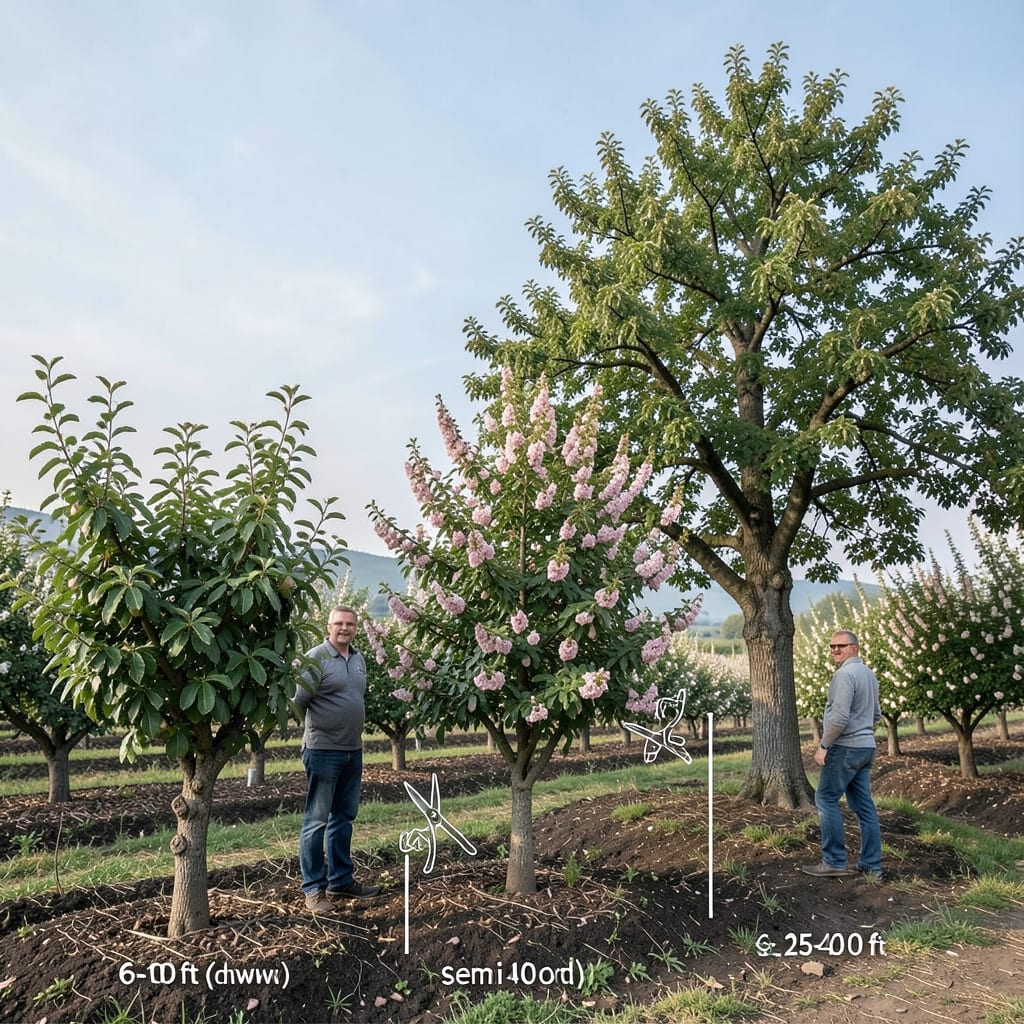
Wondering how tall can an apple tree grow before it becomes a backyard giant? The answer depends more on the variety and care you provide than you might think.
Your 🍎 Apple Tree could stretch to towering heights of 20-25 feet if you plant a standard variety—think basketball hoop height or taller. But for smaller spaces, dwarf varieties stay between 6-12 feet, making them perfect for urban gardens or even large containers. The key lies in choosing the right rootstock and pruning strategy.
Whether you're dreaming of a full orchard or just a few trees along your fence, understanding these height differences will help you plan your space—and your harvest—more effectively. Let’s break down the options so you can pick the perfect fit for your garden.
From compact dwarf varieties to sprawling standard trees, each choice impacts not just your yard layout but also how much fruit you’ll enjoy. Ready to find the best match?


Apple tree height variations: standard, semi-dwarf, and dwarf sizes explained
Apple trees aren’t one-size-fits-all—their mature heights can vary dramatically based on the rootstock used during propagation. A standard apple tree can reach heights of 20-40 feet, while dwarf varieties stay compact at just 6-12 feet. This difference isn’t just about aesthetics; it directly impacts your garden layout, fruit yield, and maintenance effort.
The rootstock determines how aggressively the tree grows, acting like the tree’s genetic foundation. For example, a M.9 rootstock produces dwarf trees, while seedling rootstock yields standard-sized giants. Even the semi-dwarf category (12-16 feet) offers a middle ground for gardeners with moderate space.
🌱
Apple Tree Height Comparison
| Type | Mature Height | Rootstock Examples | Best For |
|---|---|---|---|
| Standard | 20–40 ft | Seedling, MM.111 | Orchards, large properties |
| Semi-Dwarf | 12–16 ft | M.7, MM.106 | Backyards, small farms |
| Dwarf | 6–12 ft | M.9, B.9 | Urban gardens, containers |
Standard apple trees dominate traditional orchards because their height allows for mechanical harvesting and higher yields. However, their size requires 20-25 feet of spacing between trees, making them impractical for most home gardens. Semi-dwarf trees strike a balance, offering 50-70% of standard height while producing nearly as much fruit.
Dwarf apple trees, on the other hand, are the space-saving superstars of modern gardening. Grafted onto M.9 or B.9 rootstock, they mature in just 3-5 years and can even thrive in large containers. This makes them ideal for patios, rooftop gardens, or small urban lots where every inch counts.
One critical factor often overlooked is how pruning affects height. Even dwarf trees can grow taller if not pruned regularly. Conversely, aggressive pruning can stunt growth or reduce fruit production. The key is balanced pruning—removing 20-30% of the canopy annually to maintain shape and encourage fruit-bearing branches.
For those with limited space, consider espaliered apple trees, which can be trained to grow flat against a fence or wall at just 6-8 feet tall. This technique not only saves space but also makes fruit picking effortless. Just ensure you choose a dwarf or semi-dwarf rootstock as the foundation.
🌳
If you’re planning a commercial orchard, standard trees may be necessary for maximum yield, but for home gardeners, semi-dwarf or dwarf varieties offer the perfect blend of productivity and space efficiency. Always check the rootstock details when purchasing, as nurseries often sell trees labeled by height category rather than rootstock type.
How to choose the right apple tree height for your space and goals
Selecting the perfect apple tree height isn’t just about squeezing it into your yard—it’s about matching your space, goals, and long-term commitment. A standard apple tree might dominate your orchard dreams, but its 20-40 foot height demands serious space and maintenance. For most home gardeners, semi-dwarf or dwarf varieties strike the ideal balance between fruit production and manageable size.
Start by measuring your available space. If you’re working with a small urban yard or patio, a dwarf apple tree (6-12 ft) is your best bet. These trees thrive in large containers (15+ gallons) and can even be espaliered against a fence. For larger backyards, semi-dwarf trees (12-16 ft) offer more fruit without the upkeep of a full-sized tree.
🌿
Apple Tree Height: Pros and Cons
- Pros: Highest yield, ideal for orchards
- Cons: Requires 20+ ft spacing, heavy pruning needs
- Pros: Balanced size, easier to manage than standard
- Cons: Needs 10-15 ft spacing, moderate pruning
- Pros: Fits containers, minimal space needed
- Cons: Lower yield, requires staking/support
Consider your harvest goals next. Standard trees produce the most fruit, but their size makes them impractical for home use. Semi-dwarf trees offer 80-90% of the yield with far less space. Dwarf trees yield less but are perfect for small-scale harvesting or ornamental purposes. If you love variety, plant multiple dwarf trees—their compact size lets you grow several types in tight spaces.
Don’t overlook long-term maintenance. Larger trees require heavy pruning to control height and shape, while dwarf trees need regular support (stakes or trellises) to prevent toppling. If you’re not prepared for seasonal pruning or staking, opt for a semi-dwarf variety—it’s the most forgiving choice for busy gardeners.
🪴
For urban gardeners, dwarf apple trees are a game-changer. They fit perfectly in large pots (20+ gallons) and can be placed on patios, balconies, or even rooftop gardens. Just ensure your container has drainage holes and use a high-quality potting mix to prevent root rot. If you’re growing in containers, choose self-pollinating varieties like ‘Columnar’ or ‘Liberty’ to simplify fruit production.
Finally, think about future growth. Even dwarf trees can outgrow their space if not pruned properly. Plan for 5-10 years of growth—what seems like plenty of room now might feel cramped later. If you’re unsure, start with a semi-dwarf tree; it offers flexibility to adjust pruning as your space evolves.