
Flowers
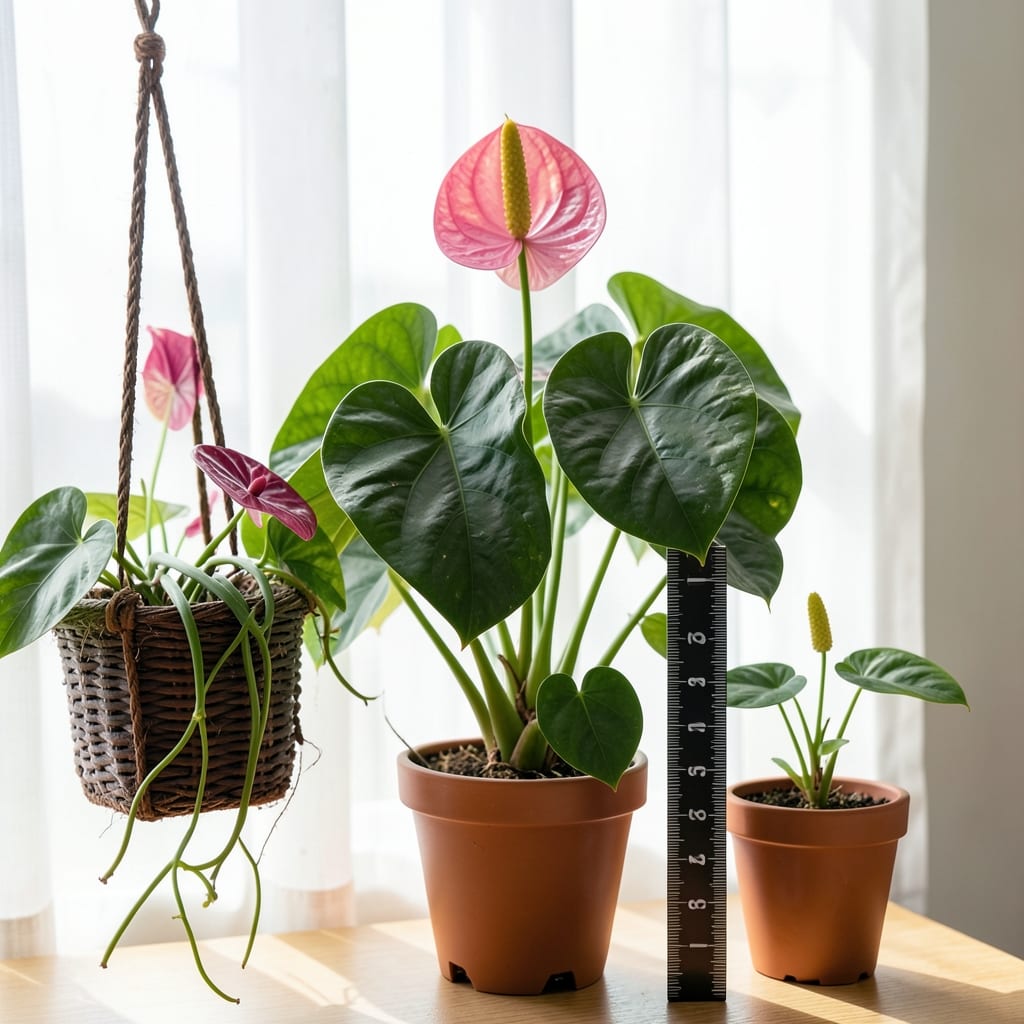
If you're wondering "how tall do anthuriums grow", you'll be relieved to know most varieties stay surprisingly compact—often under 2 feet—making them perfect for small spaces and indoor gardens.
The 🌺 Anthurium is a tropical beauty that thrives in USDA zones 10-12 (or indoors year-round in cooler climates), and its height depends on the variety. While some can reach 3 feet with proper care, many stay between 1-2 feet, especially when grown in containers.
What’s even better? These plants grow year-round, so you can enjoy their vibrant blooms almost anytime. Whether you're a beginner or a seasoned plant parent, understanding their growth habits will help you keep them lush and manageable.
In this guide, I’ll break down the compact varieties, share tips to control their size, and debunk myths about their growth—so you can enjoy your 🌺 Anthurium without worrying about it taking over your space.

Anthurium height guide: compact varieties under 2 feet explained
Anthuriums are often mistaken for sprawling tropical giants, but many varieties stay surprisingly compact—perfect for small spaces. Most mature between 1 to 3 feet, with some dwarf types barely reaching knee height. Their growth depends on species, care, and container size, so let’s break down what to expect for your indoor garden.
If you’re choosing anthuriums for apartments or offices, focus on dwarf varieties like 'Clara' or 'Peace' types, which rarely exceed 2 feet. Even standard types stay manageable with proper pruning and repotting. Let’s explore the exact heights and how to keep them from outgrowing their space.
📌 Key Takeaway: Most anthuriums mature between 1–3 feet, but dwarf varieties stay under 2 feet—ideal for small spaces. Growth habits vary: some are upright, while others trail, affecting how they fill your room.
| Variety | Mature Height | Growth Habit | Ideal Container Size |
|---|---|---|---|
| Anthurium 'Clara' | 1–1.5 ft | Upright, compact | 6–8 inch pot |
| Anthurium 'Peace' | 1.5–2 ft | Trailing, bushy | 8–10 inch pot |
| Anthurium 'Andeanum' | 2–3 ft | Upright, leggy | 10–12 inch pot |
| Anthurium 'Crystal' | 1–1.5 ft | Compact, rosette | 6–8 inch pot |
| Anthurium 'White Crystal' | 1.5–2 ft | Trailing, delicate | 8–10 inch pot |
Dwarf varieties like 'Clara' and 'Crystal' are the best choices for small spaces, staying under 1.5 feet tall. These types thrive in 6–8 inch pots and rarely need repotting, making them low-maintenance picks for apartment living. Even larger varieties like 'Andeanum' can be kept in check with regular pruning.
Light exposure plays a huge role in height control. Anthuriums grown in bright indirect light (like an east or west window) stay more compact than those stretched toward dim corners. If your plant stretches toward light, it’s time to rotate the pot or move it closer to a window.
Container size also affects height. A smaller pot (6–8 inches) restricts root growth, keeping your anthurium shorter and bushier. If you notice roots circling the pot, it’s time to repot into a slightly larger container—but only by 1–2 inches in diameter to avoid rapid growth spurts.
Pruning is another game-changer for controlling height. Trim leggy stems back to a leaf node to encourage bushier growth. This works especially well for trailing varieties like 'Peace', which can get top-heavy if left unchecked. Always use sterilized scissors to prevent disease.
Fertilizer type and schedule can also influence height. Over-fertilizing with high-nitrogen feeds promotes leafy growth at the expense of blooms and can make plants leggy. Stick to a balanced 10-10-10 fertilizer applied every 6–8 weeks in spring and summer for steady, controlled growth.
Myth-busting time: Anthuriums don’t grow taller just because they’re older. Many varieties mature at 1–2 feet and stay that size for years. The biggest mistake gardeners make is assuming all anthuriums become 3-foot giants—only certain varieties (like 'Andeanum') reach that height, and even then, with proper care, they stay manageable.
For outdoor growers in zones 10–12, anthuriums can reach their full height but benefit from pruning and support stakes if they get too leggy. Even in warm climates, keeping them in partial shade helps maintain compact growth.
Ready to pick the perfect anthurium for your space? Start with dwarf varieties like 'Clara' or 'Crystal' for the smallest footprint, or opt for 'Peace' if you love trailing foliage. With the right care, your anthurium will stay neat, blooming, and perfectly sized for years to come! 🌺
How to control anthurium growth for smaller spaces
Keeping your anthuriums from outgrowing their space is easier than you think! With the right pruning techniques and container management, you can maintain compact growth even in small apartments. The key lies in understanding how light, fertilizer, and pot size influence their height—so let’s dive into actionable tips to keep your plants neat and manageable.
First, light exposure is your best friend for controlling height. Anthuriums stretch toward light, so place them in bright indirect light (like an east or west-facing window) to prevent leggy growth. If you notice your plant leaning or stretching, it’s a sign it needs more light—or a spot closer to the window. Rotate the pot every few weeks to ensure even growth and avoid one-sided stretching.
Next, pruning is a game-changer for height control. Trim leggy stems back to a leaf node (where leaves grow) to encourage bushier growth. This works especially well for trailing varieties like 'Peace' anthuriums, which can become top-heavy. Always use sterilized scissors to prevent disease, and avoid cutting into woody stems—focus on soft, green growth instead.
Container size plays a huge role in height management. A smaller pot (6–8 inches) restricts root growth, keeping your anthurium shorter and bushier. If you notice roots circling the pot or growing out of the drainage holes, it’s time to repot into a slightly larger container—but only increase the size by 1–2 inches in diameter to avoid rapid growth spurts. Use a pot with drainage holes to prevent root rot.
Fertilizer choices can also influence height. Over-fertilizing with high-nitrogen feeds promotes leafy growth at the expense of blooms and can make plants leggy. Instead, use a balanced 10-10-10 fertilizer every 6–8 weeks during spring and summer. Reduce or stop fertilizing in fall and winter when growth slows. This ensures steady, controlled growth without excessive height increases.
For outdoor growers in zones 10–12, anthuriums can reach their full height but benefit from pruning and support stakes if they get too leggy. Even in warm climates, keeping them in partial shade helps maintain compact growth. If your outdoor anthurium starts to sprawl, use bamboo stakes or trellises to guide growth upward and prevent it from becoming unruly.
Finally, avoid the biggest mistake many gardeners make: assuming all anthuriums will grow into 3-foot giants. Most varieties mature between 1–2 feet and stay that size for years with proper care. By combining pruning, light management, and container control, you’ll keep your anthuriums neat, blooming, and perfectly sized for your space! 🌿