
Size
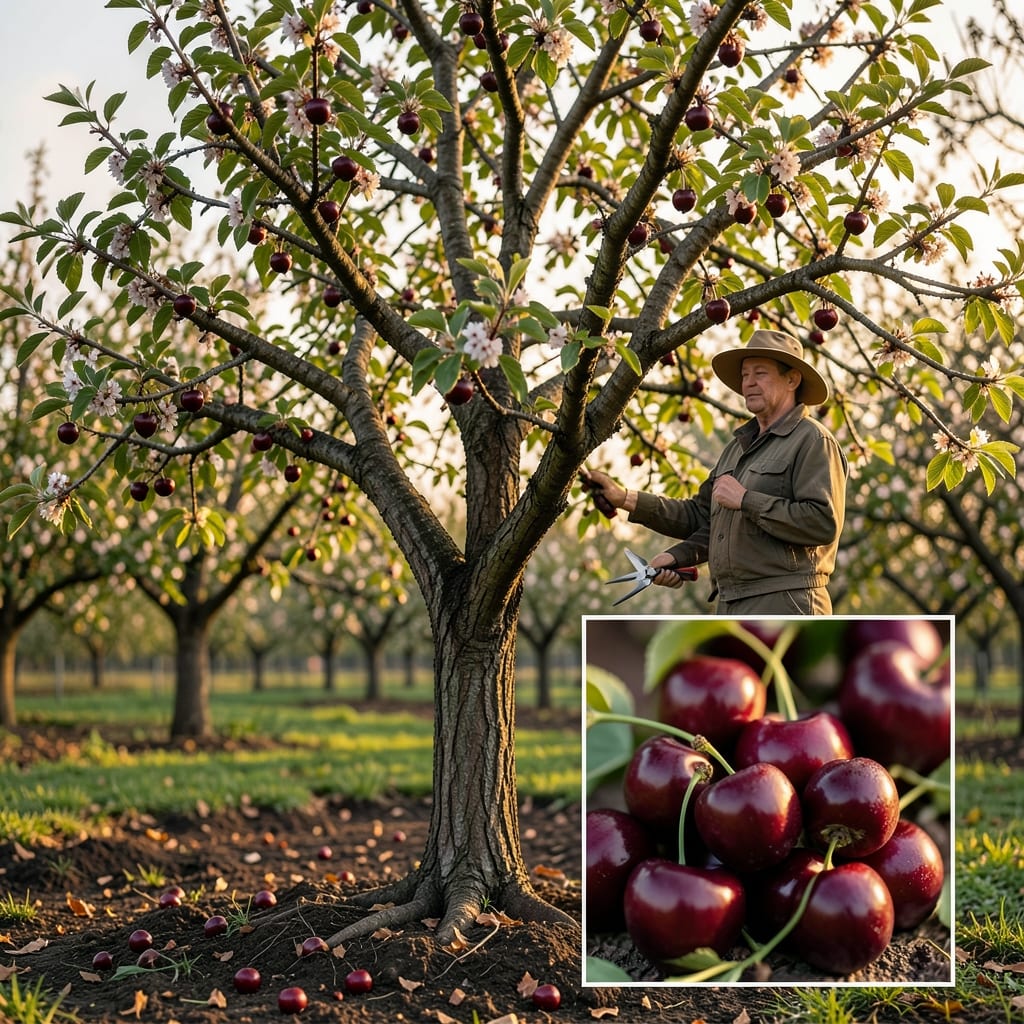
If you're wondering how tall do Bing cherry trees grow, the answer might surprise you—these trees can reach 15 to 25 feet at maturity, towering over most backyard spaces. That said, with the right variety and care, you can keep them more manageable, whether you're planting in USDA Zone 6a or elsewhere.
Bing cherry trees (🍒) come in standard, semi-dwarf, and dwarf varieties, each with its own height profile. Standard trees hit those 20-25-foot heights, while dwarf versions stay between 8-12 feet, making them perfect for smaller gardens or containers. The key to controlling their size lies in pruning and spacing from the start.
Let’s break down the exact heights by variety and share practical tips to manage growth—whether you’re dreaming of a backyard orchard or just want a manageable tree. You’ll also learn how to avoid common mistakes that make these trees grow taller than intended.
Ready to plan your planting? I’ll walk you through everything you need to know to get the perfect-sized Bing cherry tree for your space—without sacrificing that sweet harvest in June or July.

Bing cherry tree height by variety: exact mature sizes and growth rates
When planning your Bing cherry tree (🍒), knowing the exact mature height is critical—especially if you're working with limited space. Standard Bing cherry trees typically reach 20 to 25 feet at maturity, making them a statement piece in any landscape. However, if you're aiming for a more compact tree, dwarf and semi-dwarf varieties offer excellent alternatives without sacrificing fruit production.
The height of your Bing cherry tree depends largely on the variety you choose. Standard trees grow the tallest, while dwarf varieties stay under 12 feet. Even small differences in height can impact your planting strategy, so let’s break down the specifics to help you decide which variety fits your space and goals.
Below, you’ll find a detailed comparison of Bing cherry tree varieties by height, growth rate, and space requirements. This will help you visualize how each option will look in your garden and whether it aligns with your pruning and maintenance plans.
| Variety | Mature Height | Growth Rate (Annual) | Space Needs | Best For |
|---|---|---|---|---|
| Standard Bing | 20–25 ft | 1–2 ft/year | 20+ ft diameter | Large properties, orchards |
| Semi-Dwarf Bing | 12–18 ft | 1 ft/year | 15–20 ft diameter | Suburban yards, small orchards |
| Dwarf Bing | 8–12 ft | 6–12 in/year | 10–12 ft diameter | Containers, patios, small gardens |
If you’re planting a standard Bing cherry tree, expect it to reach its full height of 20–25 feet within 10–15 years. These trees grow steadily, adding 1–2 feet per year during their early years. For a more manageable option, semi-dwarf varieties are a great middle ground, reaching 12–18 feet while still producing abundant fruit.
Dwarf Bing cherry trees are ideal for gardeners with limited space. They typically mature between 8–12 feet, making them perfect for containers or small backyards. These trees grow more slowly, adding only 6–12 inches per year, which gives you more control over their height and shape.
When selecting a variety, consider not just the mature height but also the growth rate and your available space. A standard tree may be overpowering in a small yard, while a dwarf variety might struggle in a windy location. Balance these factors to ensure your tree thrives and fits seamlessly into your landscape.
For optimal growth, plant your Bing cherry tree in full sun (at least 6–8 hours daily) and well-draining soil. This ensures the tree allocates energy to fruit production rather than excessive height growth. Proper spacing is also key—standard trees need 20+ feet of clearance, while dwarf varieties can thrive in 10–12 feet of space.
Now that you know the exact heights and growth rates, you can confidently choose the perfect Bing cherry tree for your space. In the next section, I’ll share practical pruning and spacing tips to keep your tree at your desired height while maximizing your harvest.
How to control Bing cherry tree height: pruning and spacing tips for small gardens
If you’ve chosen a Bing cherry tree but worry about it outgrowing your space, don’t fret—controlling its height is absolutely possible with the right techniques. Pruning and proper spacing are your best tools to keep your tree manageable while ensuring a bountiful harvest. Even standard varieties can be trained to stay within your desired limits with consistent care.
For dwarf Bing cherry trees (8–12 ft), container gardening is a game-changer. These trees thrive in large pots (at least 18-inch diameter) with well-draining soil, allowing you to move them to optimize sunlight or protect them from harsh weather. Just ensure the container has drainage holes to prevent root rot—a common issue in confined spaces.
Here are my top practical tips for managing your Bing cherry tree’s height, whether you’re working with a semi-dwarf, dwarf, or even a standard variety. These strategies will help you maintain control without sacrificing fruit production.
- Prune in late winter or early spring (before buds swell) to remove suckers and water sprouts. This encourages a stronger framework and prevents excessive vertical growth.
- Thin out crowded branches every 2–3 years to improve airflow and light penetration. Aim to keep the central leader (main trunk) dominant.
- Use espalier training for dwarf varieties to grow them flat against a fence or wall. This not only saves space but also makes harvesting easier.
- Space trees properly from the start: 20+ ft for standards, 15–20 ft for semi-dwarfs, and 10–12 ft for dwarfs. Crowding forces trees to compete for nutrients, leading to taller, weaker growth.
- Avoid heavy fertilizing in late summer or fall. Excess nitrogen promotes vigorous but weak growth, making trees more prone to winter damage and excessive height spikes.
When pruning, always use clean, sharp tools to make precise cuts just above a bud or branch collar. Avoid leaving stubs, as they invite disease and slow recovery. For standard Bing cherry trees, focus on structural pruning to maintain an open center, which improves air circulation and reduces the risk of fungal issues like brown rot.
If you’re growing your Bing cherry tree in a container, choose a variety grafted onto a dwarfing rootstock like Mahaleb or Gisela 5. These rootstocks naturally restrict top growth while encouraging a robust root system.
Finally, monitor your tree’s growth annually and adjust your pruning strategy as needed. With patience and consistency, you can keep your Bing cherry tree at a height that fits your space—whether that’s a towering standard in a large yard or a compact dwarf on your patio. The key is to stay proactive and prioritize health over size.
Next, I’ll cover the common mistakes that cause Bing cherry trees to grow taller than expected—and how to fix them before they become permanent issues. You’ll learn how to spot overcrowding, poor pruning habits, and nutrient imbalances that lead to unchecked height growth.