
Trees
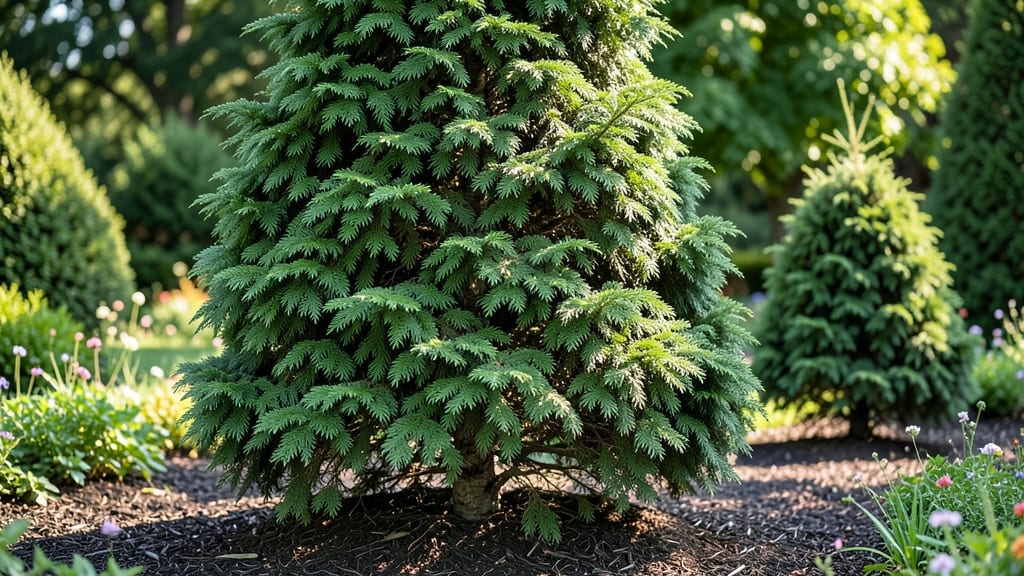
If you're wondering how tall do Thuja trees grow, you're not alone—this evergreen beauty can range from a compact 3-foot shrub to a towering 60-foot giant, depending on the variety.
The key lies in choosing the right type for your space, whether you're dreaming of a cozy privacy hedge or a bold statement tree in your landscape.
Thuja trees, or arborvitae, offer something for every garden, from dwarf varieties that stay neatly contained to fast-growing giants that reach their mature height in just a few decades. The fastest-growing types can add 3 feet per year in ideal conditions, making them a popular choice for quick privacy solutions.
But here's the catch: without proper planning, even the most manageable Thuja can outgrow its welcome. I'll break down the height variations by species, share pruning secrets to keep them in check, and help you pick the perfect fit for your yard—no surprises included.
Ready to turn your outdoor space into a Thuja-friendly haven? Let's dive into the details so you can make an informed choice that works for your vision and your space.


Thuja tree mature heights by fastest-growing varieties: a comparative guide
Choosing the right Thuja variety depends entirely on how much space you have and how quickly you want to see results.
Some varieties grow just a few feet tall, making them perfect for small gardens or container planting, while others can reach towering heights of 60 feet or more—ideal for privacy screens or large landscapes.
The fastest-growing types can add 12 inches per year or more, so let’s break down the top performers by mature height and growth rate.
If you're planning a privacy screen, you’ll want to focus on the taller varieties like Thuja plicata (Western Red Cedar) or Thuja occidentalis 'Brabant'. For smaller spaces, dwarf varieties like 'Emerald Green' or 'Little Champion' stay compact while still delivering year-round greenery.
Understanding these differences will help you avoid planting a giant tree where it won’t fit!
Here’s a quick comparison of the most popular Thuja varieties, ranked by their mature height and growth rate to help you visualize their potential in your space.
| Variety | Mature Height | Growth Rate (per year) | Ideal Spacing | Best For |
|---|---|---|---|---|
| Thuja plicata (Western Red Cedar) | 40–60 ft | 12–24 in | 15–20 ft apart | Privacy screens, large landscapes |
| Thuja occidentalis 'Brabant' | 30–40 ft | 12–18 in | 10–15 ft apart | Hedges, windbreaks |
| Thuja occidentalis 'Emerald Green' | 12–15 ft | 6–12 in | 3–5 ft apart | Small gardens, containers |
| Thuja occidentalis 'Little Champion' | 3–5 ft | 3–6 in | 2–3 ft apart | Borders, foundation plantings |
| Thuja occidentalis 'Techny' | 3–4 ft | 3–6 in | 2–3 ft apart | Dwarf hedges, rock gardens |
For fastest growth, Thuja plicata and 'Brabant' are the clear winners, adding up to 2 feet per year in ideal conditions. If you’re working with limited space, 'Little Champion' or 'Techny' are excellent choices—they stay small but still deliver that classic arborvitae look without taking over your yard.
Always check the spacing recommendations to avoid overcrowding, which can lead to poor air circulation and disease.
One common misconception is that all Thuja trees grow into giants. In reality, many varieties—like 'Emerald Green'—stay neatly contained at 12–15 feet, making them perfect for urban gardens or small backyards.
If you’re unsure about a variety’s growth potential, consult the nursery or check the plant tag for mature height estimates before purchasing.
Proper planting depth and soil drainage also influence how tall your Thuja will grow. Planting too deep can stunt growth, while well-draining, slightly acidic soil encourages faster, healthier development.
If your soil is heavy clay, consider amending it with compost or sand to improve drainage and give your tree the best start possible.
If you’re aiming for a privacy screen, plant taller varieties like Thuja plicata or 'Brabant' in a staggered formation. This creates a denser, more effective barrier while allowing light to filter through for other plants.
For smaller areas, mix dwarf varieties like 'Little Champion' with flowering shrubs or perennials to add texture and color without sacrificing space.
Remember, Thuja trees are slow to start but speed up as they mature. The first few years may show minimal growth, but once established, they can shoot up surprisingly fast—especially in full sun and well-draining soil.
Plan ahead by leaving extra room for future growth, and you’ll enjoy a stunning, low-maintenance
How to choose the right Thuja variety based on your space and needs
Selecting the perfect Thuja tree depends on your garden’s layout and goals. With dwarf varieties as low as 3 feet and towering standard types reaching 60 feet, the right choice ensures your vision thrives without overpowering your space.
Start by measuring your available area—dwarf Thuja like 'Emerald Green' (3–5 ft) works beautifully for container gardens or small yards, while medium-height options like 'Techny' (12–15 ft) create elegant privacy hedges.
For larger properties or windbreaks, consider fast-growing varieties like 'Brabant' (20–40 ft) or 'Thuja plicata' (Western Red Cedar, up to 60 feet). These giants thrive in open spaces but require regular pruning to manage their spread.
If your goal is a focal point, a columnar Thuja like 'Columna' (15–20 ft) offers a sleek, vertical silhouette perfect for modern landscapes.
Sunlight exposure also plays a critical role. Most Thuja varieties prefer full sun to partial shade, but some, like 'Golden Globe' (3–4 ft), tolerate shadier conditions better than others. Before planting, test your site’s light levels—a south-facing area will support faster growth, while north-facing spots may slow development, especially for tall varieties.
🌱 Consider your soil type next—Thuja trees thrive in well-draining soil with a slightly acidic pH (6.0–7.0). Amend heavy clay with compost or sand to prevent root rot, especially for newly planted trees.
If your soil is poorly draining, opt for dwarf or semi-dwarf varieties like 'Little Champion' (8–10 ft), which are more forgiving.
🌿 Thuja Variety Selection Guide
- 📏 Space: Small Yard? Choose dwarf (3–8 ft) like 'Emerald Green' or 'Golden Globe'.
- 🏡 Privacy Screen: Medium (10–15 ft) like 'Techny' or 'Smaragd' for dense coverage.
- 🌳 Tall Focal Point: Standard (20–60 ft) like 'Brabant' or 'Thuja plicata' for dramatic height.
- 🌿 Shady Spot: 'Golden Globe' or 'Woodwardii' tolerate lower light.
- 🌡️ Cold Climate: 'Thuja occidentalis' varieties (hardy to Zone 3) outperform others.
Don’t overlook maintenance needs—fast-growing varieties like 'Green Giant' (30–40 ft) require annual pruning to control their width, while slow-growing types like 'Little Gem' (10–12 ft) need minimal upkeep.
If you’re new to gardening, start with a low-maintenance variety like 'Smaragd', which stays compact (10–12 ft) and resists pests.
Finally, visualize your long-term vision. A Thuja tree planted today may take 5–10 years to reach maturity, so plan for its final size and how it will interact with nearby structures.
For example, a 20-foot Thuja planted 10 feet from your house could later block windows—always leave 3–5 feet of clearance for airflow and sunlight access.