
How To
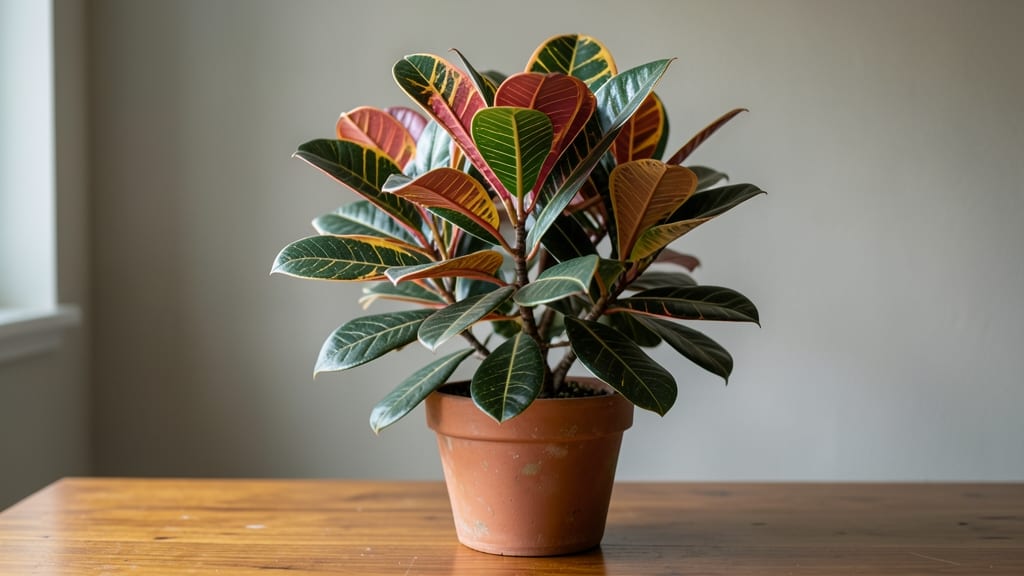
If you're eyeing that vibrant croton 🌿 in your living room and wondering how tall this plant can grow, you're not alone. The height of these striking plants can vary dramatically—some stay modest enough for shelves, while others stretch tall enough to become your home's boldest vertical statement.
Understanding how tall your croton could grow is the first step to planning its perfect spot. Whether you're dealing with a compact Petra variety or a towering standard croton, knowing the height range helps you decide where to place it for maximum impact.
Let's break down what to expect based on the type you've chosen.
Some crotons mature at just 1-2 feet, making them ideal for desks or tables, while others can reach a staggering 6 feet or more. The difference comes down to the variety, care, and a little strategic pruning.
I'll show you how to keep your plant at your ideal height—whether that means trimming it back or letting it grow wild.
Ready to make your croton thrive at the perfect size for your space? Let's dive into the growth habits, care tips, and tricks to control its height so you can enjoy its stunning foliage without the ceiling fan drama.


Croton plant height by variety: compact vs towering growth habits
If you're eyeing a croton plant for your home, the first question is almost always: how tall will it grow? The answer depends entirely on the variety—some stay under 3 feet, while others can reach 6 feet or more indoors.
I've grown Petra croton and Outrageous Orange varieties, and the difference in their mature heights is night and day.
Most croton plants (Codiaeum variegatum) fall into three height categories: dwarf (1-3 feet), semi-dwarf (3-4 feet), and standard (4-6 feet). The variety you choose will determine whether your croton becomes a tabletop centerpiece or a room-dividing statement plant.
Let’s break down the most popular types and their expected mature heights.
🌿 Visual Comparison: A standard croton can grow taller than a standard kitchen countertop (36 inches), while a dwarf variety stays at the height of a standard desk lamp (24-30 inches). This makes variety selection your first step in controlling height.
| Variety | Mature Height | Growth Habit | Best For |
|---|---|---|---|
| Petra | 1.5–3 ft | Bushy, compact | Tables, desks, shelves |
| Gold Dust | 2–4 ft | Upright, moderate spread | Floor plants, corners |
| Mammy | 3–5 ft | Tall, narrow | Tall shelves, hanging baskets |
| Outrageous Orange | 4–6 ft | Fast-growing, bushy | Large rooms, statement plants |
| Dwarf varieties (e.g., 'Purple Leaf') | 1–2 ft | Slow-growing, dense | Small spaces, terrariums |
The Petra croton is my go-to for small spaces—it stays under 3 feet and thrives in bright indirect light. In contrast, the Outrageous Orange variety can shoot up to 6 feet if left unpruned, making it perfect for large rooms or as a focal point.
If you're unsure which to pick, consider your available space and lighting conditions first.
One common misconception is that all crotons grow tall. In reality, dwarf varieties are bred specifically to stay small, while standard varieties will reach their full height unless pruned regularly.
I’ve seen Gold Dust crotons in nurseries that were 4 feet tall in just one growing season—their growth speed is impressive!
For indoor growers, height is often controlled by light exposure and pruning frequency. A croton in a south-facing window with 6+ hours of sunlight will grow faster and taller than one in a north-facing room.
If you want to limit height, reduce light exposure slightly or prune the top growth back by 1/3 every few months.
Outdoor crotons in USDA Zones 10-12 can grow even taller—some varieties reach 8 feet when planted in the ground. However, most home gardeners grow crotons as houseplants, so the 3-6 foot range is what you’ll typically encounter.
If you’re growing yours outdoors in a pot, expect 1-2 feet less height due to container restrictions.
Pro tip: If you’re buying a croton from a nursery, ask about the variety before purchasing. A tall variety like Mammy might not suit your small apartment, while a dwarf variety could get lost in a large living room.
Match the plant to your space for the best results!
🌱 Whether you love the compact charm of a Petra croton or the dramatic height of an Outrageous Orange, understanding these height ranges will help you choose—and care for—your plant like a pro.
Factors that control croton height: pruning, light & variety secrets
Your croton plant’s height isn’t set in stone—it’s shaped by your care choices! The right pruning techniques can keep a towering variety at tabletop height, while light exposure determines how quickly it reaches its mature size.
Even the variety you choose plays a starring role in whether your croton stays compact or climbs toward the ceiling.
Let’s break down the three biggest factors controlling your croton’s height: pruning habits, light conditions, and variety selection. Master these, and you’ll grow a croton that fits your space perfectly—whether you want a bushy statement plant or a manageable tabletop buddy.
🌱 3 Key Factors That Shape Your Croton’s Height
- 🌿 Pruning: Cut back 1/3 of growth to control height and encourage bushiness
- ☀️ Light: Full sun = faster growth; low light = slower, leggier growth
- 🌻 Variety: Dwarf types stay 1-2 ft; standard types reach 3-6 ft
Pro Tip: Combine pruning + bright light for the most control over your croton’s height.
Pruning is your secret weapon for height control. When you trim back leggy stems by 1/3 of their length, you force the plant to grow wider instead of taller.
This works especially well for standard varieties that might otherwise outgrow your space. Just remember: always prune above a leaf node to encourage new growth.
Light exposure directly impacts how fast your croton grows—and thus how tall it becomes. A sun-loving plant, crotons grow 2-3x faster in bright, indirect light compared to dim corners.
If your plant stretches toward the window, it’s begging for more light. Move it closer to a south-facing window or supplement with a grow light to keep growth balanced.
Not all crotons are created equal! Dwarf varieties like ‘Petra’ max out at 1-2 feet, making them perfect for shelves or desks.
Meanwhile, standard types like ‘Mammy’ or ‘Outrageous Orange’ can reach 5-6 feet if left unchecked. Choose your variety based on your space—then adjust care to match its natural growth habit.
For fastest height control, combine pruning with light management. Prune in spring to shape growth for the season, and supplement with grow lights if natural light is limited. With these tweaks, even a tall-growing variety can stay within your desired height limits.
Remember: Crotons are flexible growers. With the right care, you can turn a 6-foot monster into a 2-foot tabletop treasure—or let it thrive as a room-filling centerpiece. The choice is yours!