
How To
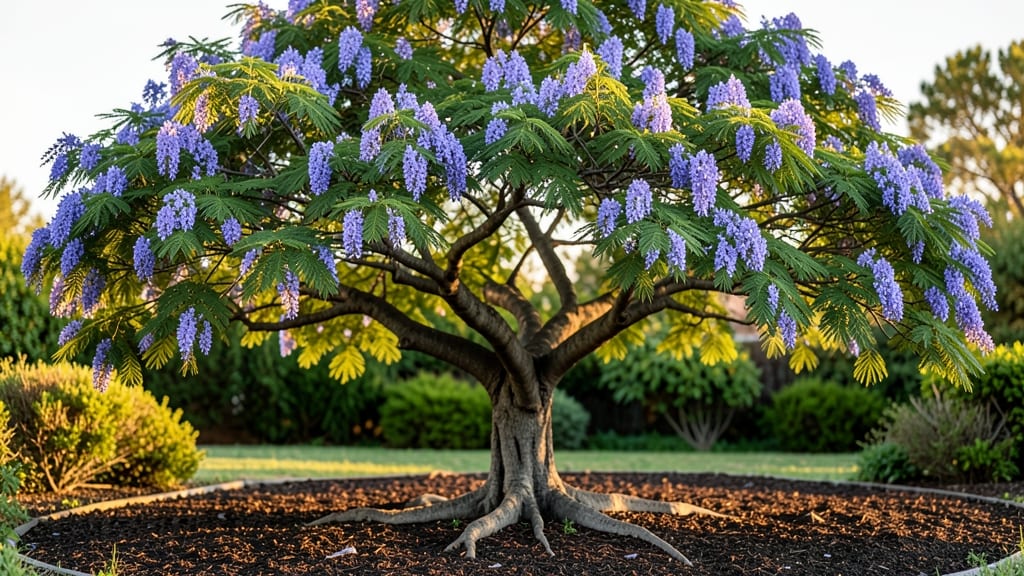
If you’ve ever dreamed of a sky-blue canopy in your yard, the Jacaranda Tree 🌳 might have you wondering—just how tall does this tropical beauty grow? The answer isn’t one-size-fits-all, but knowing the variety and care secrets can help you plan for a stunning (and manageable) addition to your landscape.
Most Jacaranda trees mature between 30 to 50 feet, towering like a natural skyscraper in your backyard. However, some varieties stay shorter, making them perfect for smaller spaces or urban gardens. The key to controlling its height lies in pruning techniques and understanding its growth habits.
Whether you’re planting in USDA Zone 6a or a warmer climate, timing matters—especially when it comes to planting in April or May for optimal growth. With the right care, you can shape this majestic tree to fit your space while still enjoying its breathtaking spring blooms.
Ready to transform your outdoor space? I’ll break down everything you need to know—from variety-specific heights to pruning tips—to help you grow the perfect Jacaranda Tree for your garden.


Jacaranda tree height by variety: from small to stately giants
The jacaranda tree (Jacaranda mimosifolia) is famous for its sky-blue blooms, but its mature height can vary dramatically depending on the variety. Most common types reach 30 to 50 feet at full maturity, but some stay shorter with proper care.
Understanding these differences helps you plan your landscape—whether you want a towering shade tree or a more manageable specimen.
For example, the standard jacaranda (Jacaranda mimosifolia) typically grows 30-50 feet tall with a spread of 25-40 feet. This makes it a statement tree for large yards or parks.
However, if you’re working with limited space, other varieties like the ‘Upright’ cultivar or Jacaranda caroba might be better choices, as they grow slightly shorter under ideal conditions.
Here’s the key: sunlight, soil quality, and pruning all influence height. A jacaranda in full sun with well-draining soil will grow faster and taller than one in partial shade or poor soil.
In urban settings, where space is tight, many gardeners use container growing or dwarf varieties to keep heights manageable.
🌳
| Variety | Mature Height | Spread | Growth Rate | Best For |
|---|---|---|---|---|
| Jacaranda mimosifolia | 30-50 ft | 25-40 ft | Moderate-Fast | Large yards, parks |
| Jacaranda mimosifolia ‘Upright’ | 25-35 ft | 15-20 ft | Moderate | Urban gardens, smaller lots |
| Jacaranda caroba | 20-30 ft | 15-25 ft | Slow-Moderate | Drought-prone areas |
| Jacaranda acutifolia | 15-25 ft | 10-15 ft | Slow | Containers, small spaces |
If you’re planting in USDA Zones 9-11, where jacarandas thrive year-round, expect faster growth and larger mature sizes. In cooler zones (7-8), growth slows, and heights may max out at 20-30 feet due to seasonal dormancy.
For instance, in Zone 9, a standard jacaranda can reach 40 feet in 15 years, while in Zone 8, it might take 20 years to reach the same height.
Another factor is root competition. Jacarandas have aggressive roots, so planting them too close to sidewalks, foundations, or other trees can stunt their growth—or even damage nearby structures.
Always give them at least 20 feet of clearance from buildings and 15 feet from other trees to avoid root conflicts.
For gardeners in small urban spaces, consider the ‘Upright’ cultivar or container-grown jacarandas. These options let you enjoy the iconic blooms without sacrificing yard space. Just remember: even compact varieties need full sun and regular pruning to stay at their ideal height.
🪴
One common mistake is assuming all jacarandas grow the same. For example, Jacaranda caroba is often confused with the standard variety but stays 10-15 feet shorter.
This tropical native also has darker foliage and smaller flowers, making it a great alternative if you want a low-maintenance, shorter tree. Always check the nursery label or ask for the exact variety before purchasing.
Pro tip: If you’re buying a young jacaranda, look for upright growth habits in the nursery. Some trees start with a wider canopy but can be pruned to stay taller and narrower.
This is especially useful for street trees or narrow lots, where vertical space is more valuable than horizontal spread.
Finally, don’t forget that pruning in winter (after blooming season) can influence height. Heavy pruning can reduce height by up to 30% if done correctly, while
How to control jacaranda tree height: pruning tips and growth hacks
Managing a jacaranda tree’s height isn’t just about aesthetics—it’s about safety, bloom health, and long-term tree vitality. Without proper care, your 30-50 foot giant could outgrow your yard in just a decade.
The key is strategic pruning combined with smart cultivation practices to guide its growth while preserving those iconic sky-blue flowers.
Start by understanding that jacarandas grow fastest in full sun and well-draining soil. If your tree is shooting up too quickly, it may need less water or shade during peak summer months.
I’ve found that deep watering every 7-10 days (rather than frequent shallow watering) encourages stronger root systems, which naturally slows vertical growth.
For height control, the best time to prune is late winter or early spring, just before new growth begins. This timing ensures you don’t cut off next year’s flowering buds, which form on old wood.
Use sharp, clean pruners to make cuts just above a bud or branch collar—never leave stubs, as they invite disease.
🌿 Step-by-Step Pruning Guide for Jacaranda Height Control
- Step 1: Remove dead or crossing branches first to improve air circulation.
- Step 2: Cut back vertical water sprouts (shoots growing straight up) by ⅓ to redirect energy to side branches.
- Step 3: Thin out inner branches to let sunlight reach the canopy center, encouraging wider growth.
- Step 4: Never prune more than 25% of the canopy in one season to avoid stress.
- Step 5: Apply wound dressing only to cuts larger than 2 inches in diameter.
Did you know? Jacarandas produce more flowers on older wood, so avoid heavy pruning of mature branches. Instead, focus on structural shaping and removing only the most aggressive vertical growth.
I’ve seen trees in USDA Zone 9 kept at 15-20 feet tall with consistent pruning—proof that even large jacarandas can be managed!
For urban gardeners with limited space, consider crown reduction pruning every 2-3 years. This involves shortening the outer branches by ⅓ to reduce overall height while maintaining the tree’s natural shape. Always sterilize your pruners with rubbing alcohol between cuts to prevent bacterial spread.
One pro tip: If your jacaranda’s growth seems stunted, it might need a balanced fertilizer (6-6-6 NPK ratio) applied in early spring. Over-fertilizing can actually spur excessive vertical growth, so follow the 1 lb per 100 sq ft guideline and water thoroughly after application.
Finally, remember that patience is key. A jacaranda’s first few years focus on root development—don’t rush pruning. With the right approach, you can enjoy those breathtaking blooms without sacrificing your yard’s layout. 🌳