
How To
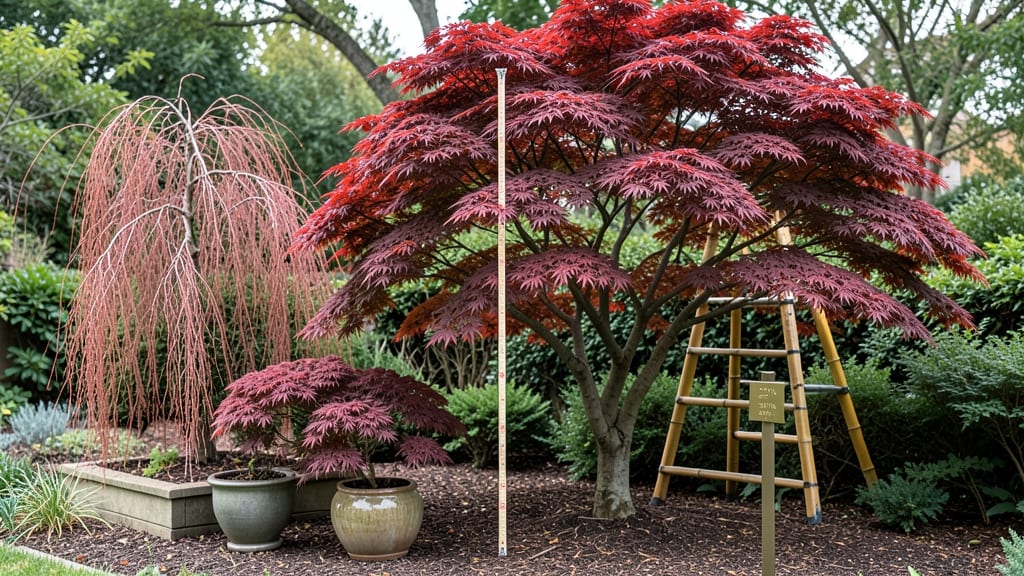
If you're dreaming of adding a stunning Japanese Maple Tree 🌳 to your landscape, the first question you'll need to answer is: how tall does it grow?
The answer isn't one-size-fits-all—some varieties stay small enough for container gardens, while others reach towering heights that make them a focal point in any yard.
Understanding these height variations is more than just a curiosity—it's the key to designing a space that works for your property.
Whether you're working with a cozy backyard or a sprawling estate, knowing whether your chosen variety will stay under 10 feet or soar past 25 feet helps you plan spacing, sunlight exposure, and even pruning strategies from day one.
In this guide, we'll break down the height ranges by popular cultivars, from dwarf varieties perfect for patios to majestic standards that command attention.
You'll also discover how factors like climate, soil, and pruning habits can influence growth patterns—so you can set your tree up for success right from planting season.
Ready to make an informed choice? Let's explore how to match the perfect Japanese Maple Tree to your vision—whether you want a delicate accent plant or a grand centerpiece that will grow with your landscape for decades.


Japanese maple tree height ranges by variety: from dwarf to giant
Japanese maple trees (Acer palmatum) offer a breathtaking range of heights, from tiny tabletop varieties to towering specimens that command attention in large landscapes.
The mature height of your tree depends entirely on the cultivar you choose—some stay under 5 feet, while others reach 30 feet or more. Understanding these differences is key to selecting the perfect tree for your space, whether you’re designing a small urban garden or a sprawling estate.
Most gardeners focus on three key factors when choosing a Japanese maple: height range, growth rate, and spread.
Dwarf varieties like 'Shishigashira' grow just 3–5 feet tall and are ideal for containers or bonsai-style gardens, while standard types like 'Bloodgood' can soar to 20–30 feet, making them stunning focal points. Even within these categories, individual trees can vary by 5–10 feet depending on growing conditions and care.
Here’s the critical insight: Japanese maples grow slowly—typically 6–12 inches per year—so their height over decades matters more than immediate size. A 10-foot tree today could easily double in height by maturity, which is why spacing and future growth are non-negotiable in your planting plan.
Let’s break down the most popular varieties by size category so you can make an informed choice.
Japanese Maple Height Guide by Variety
| Size Category | Popular Varieties | Mature Height (ft) | Spread (ft) | Growth Rate (in/yr) | Best For |
|---|---|---|---|---|---|
| Dwarf | 'Shishigashira', 'Tamukeyama', 'Mikura' | 3–5 ft | 3–6 ft | 3–6 in | Containers, bonsai, small gardens |
| Small | 'Bloodgood' (dwarf form), 'Emperor I', 'Orangeola' | 6–12 ft | 6–10 ft | 6–12 in | Small yards, foundation planting |
| Medium | 'Bloodgood' (standard), 'Crimson Queen', 'Sango-kaku' | 12–20 ft | 10–15 ft | 12–18 in | Medium gardens, focal points |
| Large | 'Atropurpureum', 'Shishio', 'Kagiri' | 20–30 ft | 15–25 ft | 18–24 in | Large estates, park landscapes |
*Note: Heights can vary by 2–3 feet based on climate, soil, and pruning practices.
If you’re working with a limited space, dwarf varieties like 'Tamukeyama' (just 3–4 feet tall) are game-changers. These trees thrive in 15-gallon containers and can even be grown as bonsai with proper care.
For urban gardens, consider 'Orangeola', which tops out at 8–10 feet and offers vibrant orange foliage year-round. Its compact size makes it perfect for patio plantings or as a centerpiece in a small courtyard.
On the opposite end of the spectrum, large varieties like 'Atropurpureum' (also called 'Purple Maple') can reach 25–30 feet at maturity, making them ideal for backyard canopies or as shade trees near driveways.
These trees require ample root space—plant them at least 15 feet away from structures or other plants to avoid root competition. Their slow growth rate means you’ll enjoy decades of vibrant foliage without worrying about rapid expansion.
One common mistake I see is assuming all Japanese maples follow the same growth pattern. For example, 'Bloodgood' exists in both dwarf (6–8 ft) and <
How Japanese maple growth habits affect your landscape design
Japanese maple trees aren’t just about height—their growth habits determine whether they’ll thrive as a delicate container specimen or a statement centerpiece. Understanding these patterns helps you place them perfectly, whether you’re working with a tiny courtyard or a sprawling backyard.
For example, a dwarf variety like 'Shishigashira' grows slowly but wide, while 'Bloodgood' reaches towering heights with a narrower spread.
Most Japanese maples grow 3–12 inches per year, but this varies by variety and climate conditions. In USDA Zone 6–8, expect faster growth than in colder regions. Pruning in late winter can control height, but avoid heavy cuts—these trees respond poorly to aggressive trimming.
Instead, focus on shaping young branches to guide their natural form.
- Dwarf varieties (3–5 ft) grow 1–2 inches/year—ideal for urban gardens or patio containers.
- Medium varieties (10–15 ft) need 10–15 ft spacing to avoid root competition.
- Tall varieties (20–30 ft) cast deep shade—place them near south-facing walls for winter sun.
- Slow growers take 10+ years to reach maturity—plan accordingly!
- Fast growers (like 'Emperor I') can add 1 ft/year—prune early to manage size.
Your landscape design hinges on the tree’s spread-to-height ratio. A weeping variety like 'Crimson Sentinel' spreads wider than it grows tall, making it perfect for foundation plantings. Meanwhile, upright types like 'Green Cascade' grow vertically, excelling as focal points in small gardens.
Always measure your space before planting—overcrowding leads to stunted growth and pests.
Seasonal growth also matters. Japanese maples burst into leaf in spring, reaching 70–80% of their final height by summer. In hot climates, afternoon shade prevents leaf scorch, while cold winters may slow growth. Mulch with organic matter to protect roots and retain moisture—this keeps growth steady year-round.
For container gardening, choose dwarf or semi-dwarf varieties like 'Beni Kawa' (4–6 ft). Use a well-draining pot at least 24 inches wide and refresh potting mix annually. Containers dry out faster, so water deeply 2–3 times per week in summer.
If you’re planting in ground beds, amend soil with compost to improve drainage—waterlogged roots stunt growth.
Finally, match your tree’s mature height to your property scale. A 30-foot 'Bloodgood' will dwarf a 1,500 sq ft yard, while a 5-foot 'Shishigashira' fits cozy balconies. Sketch your layout first—overestimating space is the #1 mistake gardeners make with these stunning but slow-growing trees. 🌳