
How To
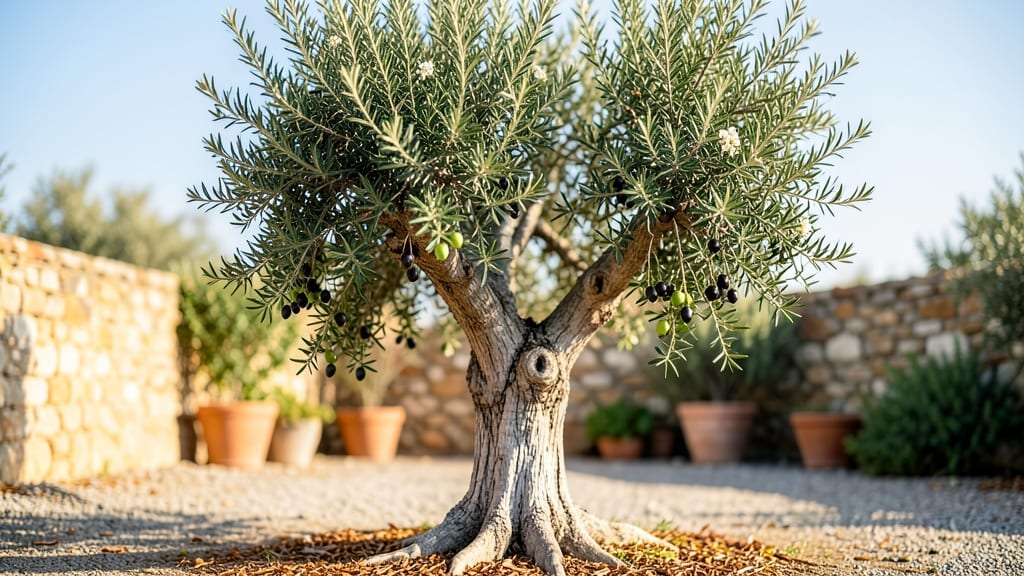
If you've ever wondered how tall does an olive tree grow, the answer might surprise you—some varieties reach towering heights of 50 feet or more, while others stay neatly contained in pots.
Whether you're planning a backyard grove or a container garden, choosing the right size is the first step to success.
The key to managing an olive tree's height lies in its variety. Dwarf types like Arbequina stay under 12 feet, perfect for small spaces, while standard varieties like Manzanillo can stretch toward the sky.
Your climate zone also plays a role—cooler areas like USDA Zone 6a may need more pruning to control growth compared to warmer Mediterranean regions.
Don't let size intimidate you—with the right approach, you can shape an olive tree to fit your space.
I'll show you how to select the perfect variety, prune strategically, and create a thriving 🫒 olive tree that works for your garden, whether you want a statement piece or a compact centerpiece.
Ready to transform your outdoor space? Let's explore the options so you can grow the olive tree of your dreams—no matter how much (or little) room you have.


Olive tree height by variety: from dwarf to giant sizes
Olive trees (Olea europaea) are incredibly versatile, with mature heights ranging from compact 8-foot dwarf varieties to towering 50-foot giants. The variety you choose determines not just height but also fruit production, cold hardiness, and even container suitability.
For example, the Arbequina olive tree stays under 10 feet—perfect for pots—while the Manzanillo can reach 40 feet in ideal conditions. Let’s break down the most popular types and their growth potential to help you pick the perfect fit for your space.
If you’re working with limited space, dwarf olive trees are your best bet. These container-friendly varieties often top out at 8–12 feet and thrive in large pots with proper drainage.
Varieties like Little Ollie or Swan Hill Dwarf are designed for patios and small yards, producing abundant olives despite their modest stature.
On the other end of the spectrum, standard olive trees like Frantoio or Mission can grow 20–50 feet tall, making them ideal for large landscapes or Mediterranean-style gardens where they can spread their iconic silver-green foliage.
🌱
When selecting an olive tree, consider not just height but also your local climate zone. For instance, Arbequina and Swan Hill Dwarf are stunning choices for USDA Zones 9–11, where winters are mild.
However, if you’re in Zone 7 or 8, opt for hardier varieties like Manzanillo or Mission, which can tolerate brief cold snaps down to 15–20°F.
Even within the same variety, coastal microclimates (like those near the Pacific or Atlantic) often produce slightly taller trees due to warmer winters and consistent humidity.
Another key factor is whether you want your olive tree for ornamental purposes or fruit production. Dwarf varieties like Little Ollie are ideal for container gardening and produce small but flavorful olives, while larger trees like Frantoio are better suited for commercial harvests.
If you’re growing olives for table use, prioritize varieties like Manzanillo or Mission, which yield large, dual-purpose fruits (great for both eating and oil extraction). For purely decorative purposes, the silver-blue foliage of a standard olive tree adds stunning texture to any landscape.
How climate zones affect olive tree growth and maximum height
Olive trees thrive in USDA zones 8-10, where warm winters and hot summers create ideal growing conditions. But did you know your local microclimate—like coastal fog or inland heat—can push a tree to reach 50 feet or keep it stunted at 20 feet?
Let’s break down how your climate zone influences height, cold hardiness, and pruning needs.
In Zone 10 (e.g., Southern California, Florida), olive trees grow the tallest—often 30-50 feet—because they experience minimal winter stress. Meanwhile, in Zone 8 (e.g., parts of Texas, coastal Oregon), trees may max out at 20-30 feet due to occasional frost.
Even within the same zone, coastal areas (like San Francisco) produce shorter, bushier trees thanks to cooler summers and high humidity.
Cold snaps below 20°F can damage or kill young olive trees, forcing them to grow slower and stay compact. If you’re in Zone 7 or colder, choose cold-hardy varieties like ‘Arbequina’ or ‘Frantoio’, which tolerate brief dips to 15°F and rarely exceed 20 feet in height.
In contrast, ‘Manzanillo’ or ‘Mission’ varieties in Zone 10 can soar past 40 feet without intervention.
| Climate Zone | Max Height (ft) | Cold Hardiness (°F) | Pruning Needs | Growth Rate |
|---|---|---|---|---|
| Zone 10 (e.g., LA, Miami) | 30–50 | 25°F+ | Minimal (structural) | Fast |
| Zone 9 (e.g., Phoenix, Austin) | 25–40 | 20°F+ | Moderate (shape) | Moderate |
| Zone 8 (e.g., San Diego, Atlanta) | 20–30 | 15°F+ | Regular (height control) | Slow-Moderate |
| Zone 7 (e.g., Dallas, Portland) | 15–20 | 10°F+ (with protection) | Aggressive (winter prep) | Slow |
*Height varies by variety and growing conditions.
If you’re in a coastal zone, expect your olive tree to grow wider rather than taller due to high humidity and wind. Inland areas with hot, dry summers (like the Southwest) encourage vertical growth, so regular pruning is key to manage height.
For example, a ‘Frantoio’ tree in Zone 9 might hit 35 feet without pruning, while the same tree in Zone 8 could stay under 25 feet with annual trimming.
Pro tip: Mulch heavily in colder zones to protect roots and encourage deeper (not taller) growth. In warmer zones, focus on watering deeply during droughts to support structural integrity—shallow roots can’t anchor a 40-foot tree! 🌳
Your climate isn’t just about temperature—it’s about the big picture. A tree’s height potential is a mix of genetics, sunlight, water, and pruning.
Use this guide to pick the right variety for your zone and space, then adjust care to keep it at your desired height—whether that’s a potted dwarf or a towering landscape centerpiece. ☀️