
How To
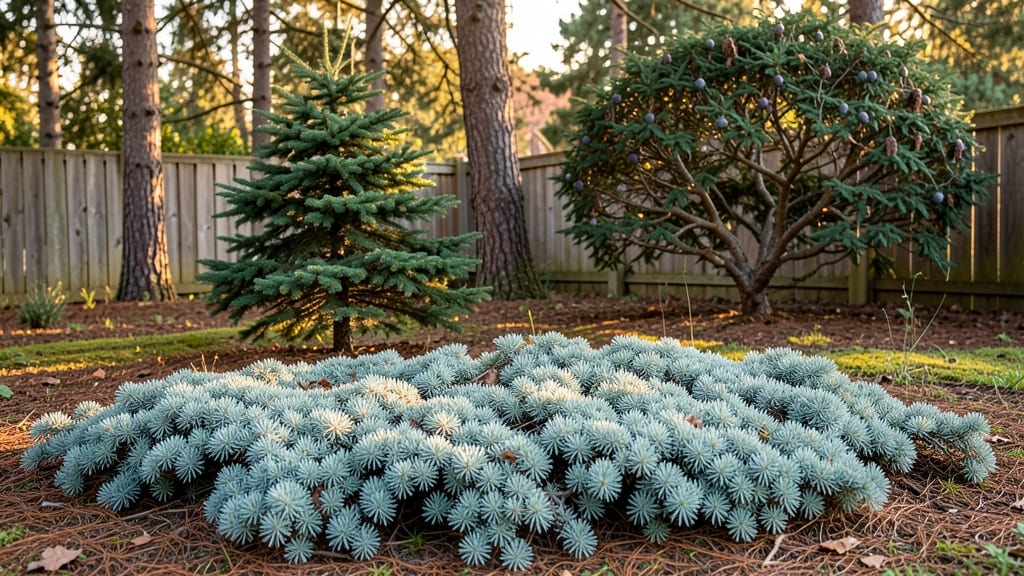
If you're planning to add a juniper 🌲 to your yard, one of the first questions you'll have is how tall does juniper grow—because some varieties reach towering heights while others stay compact.
The good news? With the right species and care, you can choose a juniper that fits your space perfectly, whether you want a low hedge or a striking focal point.
Juniper trees and shrubs offer an incredible range of sizes, from dwarf varieties that top out at just 3 feet to towering giants that stretch over 40 feet tall.
This diversity means you can find the perfect fit for your landscape, whether you're working with a small urban garden or a sprawling rural property. The key is understanding how each type grows and what conditions encourage (or limit) their height.
Beyond just height, factors like growth rate, pruning habits, and even soil type play a big role in shaping your juniper's final size. Some varieties grow 2-3 feet per year in ideal conditions, while others creep along at just a few inches annually.
I'll break down everything you need to know to pick the right juniper for your space and keep it looking its best.
Whether you're dreaming of a privacy screen or just want to add some evergreen texture to your yard, knowing these details will help you make an informed choice. Let's dive into the specifics so you can plan your landscape with confidence.


Juniper tree height by variety: from dwarf to giant species
Juniper trees offer an incredible range of heights, from tiny dwarf varieties perfect for rock gardens to towering giant species that dominate landscapes. The mature height of your juniper depends entirely on the species—some stay under 3 feet while others reach 60 feet or more.
Understanding these differences helps you choose the right variety for your space and climate.
Most junipers grow at a moderate pace, gaining 1-2 feet per year in their first decade. However, some fast-growing varieties like Eastern Red Cedar can shoot up 3 feet annually when conditions are ideal.
Slow-growing varieties, such as Creeping Juniper, may only add 6 inches per year, making them ideal for low-maintenance gardens.
Here’s the key: Soil drainage, sunlight exposure, and pruning habits all influence how tall your juniper will grow. For example, junipers planted in well-draining soil with full sun tend to grow taller and fuller, while those in poor soil or shade may stay shorter but denser.
| Variety | Mature Height | Growth Rate | Best For |
|---|---|---|---|
| Creeping Juniper (J. horizontalis) | 3–6 ft (spreading) | Slow (6 in/year) | Ground cover, slopes, rock gardens |
| Blue Rug Juniper (J. horizontalis 'Blue Rug') | 2–3 ft | Very slow (3 in/year) | Containers, borders, drought-prone areas |
| Sargent Juniper (J. chinensis 'Sargentii') | 10–15 ft | Moderate (1–2 ft/year) | Privacy screens, hedges, windbreaks |
| Eastern Red Cedar (J. virginiana) | 30–40 ft | Fast (2–3 ft/year) | Large landscapes, wildlife habitats |
| Skyrocket Juniper (J. scopulorum 'Skyrocket') | 12–15 ft (narrow) | Moderate (1–2 ft/year) | Vertical accents, narrow spaces |
| Pfitzer Juniper (J. × pfitzeriana) | 8–12 ft (spreading) | Moderate (1 ft/year) | Hedges, foundation plantings |
| Common Juniper (J. communis) | 10–20 ft | Slow to moderate | Wildlife gardens, rustic landscapes |
If you’re planning for a small garden, dwarf varieties like Blue Rug Juniper or Creeping Juniper are perfect, staying under 3 feet while still providing year-round color. For privacy screens or windbreaks, taller varieties like Eastern Red Cedar or Sargent Juniper excel, reaching 30–40 feet in ideal conditions.
One of my favorite medium-height junipers is the Skyrocket Juniper, which grows in a narrow column up to 15 feet. This makes it ideal for tight spaces where you need height without width.
For a balanced look, the Pfitzer Juniper spreads wider than it grows tall, creating a low, dense hedge perfect for foundation plantings.
When selecting a juniper, consider your local climate. Junipers in USDA Zones 3–9 thrive in full sun and well-draining soil. In hot, dry climates, they grow faster and taller, while cooler or wetter regions may slow their growth.
Always check the mature height of your chosen variety before planting to avoid surprises.
For example, if you live in Zone 5 and want a tall juniper, the Eastern Red Cedar is a great choice—it handles cold snaps well and grows quickly. However, if you’re in Zone 9 with intense heat, opt for a dwarf or semi
How to control juniper growth: pruning, spacing, and soil tips
Managing juniper height starts with understanding their natural growth patterns. While some varieties like Eastern Red Cedar (Juniperus virginiana) can reach 40 feet tall, others like Blue Rug Juniper stay under 3 feet.
The key to controlling their size lies in pruning techniques, proper plant spacing, and soil conditions.
Pruning is your best tool for shaping junipers and keeping them within desired limits. Unlike many plants, junipers respond well to shear pruning—a method where you trim new growth to encourage denser, bushier growth.
For taller varieties, focus on removing top branches to slow vertical expansion while maintaining a fuller canopy.
🌲 Juniper Growth Control Tips
- Prune in late spring or early summer to shape junipers before new growth hardens. Avoid heavy pruning in fall or winter, as it can stress the plant.
- Use sharp, clean pruners to make precise cuts just above a leaf node to prevent disease and encourage faster healing.
- For dwarf varieties, limit pruning to 1/3 of the plant at a time to avoid stunting growth entirely.
- Space junipers 3-10 feet apart depending on the variety—closer for dwarf types, wider for tall trees—to allow airflow and reduce competition.
- Amend clay-heavy soil with sand or compost to improve drainage, which discourages overgrowth by preventing root stress.
Proper plant spacing is another critical factor in controlling juniper growth. Junipers with shallow root systems, like Creeping Juniper (Juniperus horizontalis), need at least 3 feet of space to spread without crowding.
For taller species like Pencil Point Juniper (Juniperus deppeana), allow 10-15 feet between plants to prevent root competition, which can lead to slower, weaker growth.
Soil quality plays a surprising role in managing height. Junipers thrive in well-draining, slightly acidic soil (pH 6.0-7.0). If your soil is too fertile, junipers may grow too quickly and become top-heavy.
To slow growth, avoid heavy fertilization—instead, use a low-nitrogen fertilizer (like 5-10-10) sparingly, every 2-3 years.
For container-grown junipers, choose pots with adequate drainage and limit root space to restrict growth. Repot only when roots fill the container, and prune roots lightly during repotting to encourage compact growth.
This method is ideal for dwarf junipers like Sargent Juniper, which can stay under 5 feet tall with proper care.
Finally, monitor your junipers for signs of overgrowth, such as long, leggy branches or sparse foliage. These are red flags that your plant needs corrective pruning or adjusted care.
With the right approach, even fast-growing junipers can be kept at a manageable height while maintaining their beauty and health. 🪴