
How To
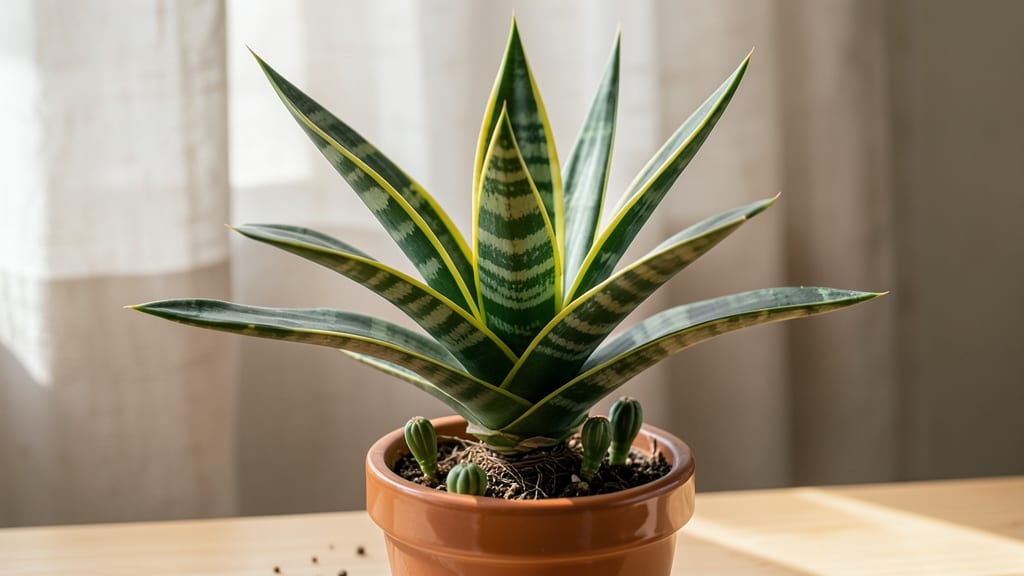
If you're wondering how tall does sansevieria grow, the answer might surprise you—because this hardy plant can be either a compact desk companion or a dramatic room divider, depending on the variety and your care approach.
Some snake plants stay under 12 inches tall, perfect for small spaces or shelves, while others stretch toward the ceiling, reaching 8 feet or more in ideal conditions.
The key lies in understanding which types thrive in your home and how simple adjustments—like light exposure or pot size—can shape their growth trajectory.
Whether you're dealing with a 'Futura Superba' that stays low and bushy or a 'Laurentii' that climbs toward the sky, I’ll break down exactly what to expect from each variety. You’ll also discover how to control height—whether you want a taller statement plant or a manageable size for your space.
Let’s dive into the specifics so you can choose (or grow) the perfect sansevieria for your home—no guesswork required.


Sansevieria height by variety: from dwarf to towering giants
Your Sansevieria height depends entirely on the variety you've chosen. Some stay small enough for desks, while others become dramatic vertical statements in your home. Let's explore the most popular types and their mature heights to help you pick the perfect fit for your space.
If you're working with limited space, dwarf varieties like Sansevieria 'Hahnii' (also called "Bird's Nest") stay under 12 inches tall, making them ideal for shelves or window sills. On the other end of the spectrum, Sansevieria 'Futura Superba' can reach 6-8 feet indoors with proper care.
For most home gardeners, the standard Sansevieria trifasciata (also called "Mother-in-Law's Tongue") grows between 2-4 feet tall, making it versatile for tables, floors, or even hanging baskets. The key to controlling height lies in understanding each variety's natural growth pattern and how your care routine influences it.
Sansevieria Varieties by Height
| Variety | Mature Height | Growth Habit | Best For |
|---|---|---|---|
| Sansevieria 'Hahnii' | 6-12 inches | Compact, rosette-forming | Desks, shelves, terrariums |
| Sansevieria 'Laurentii' | 2-3 feet | Upright, medium growth | Tables, floors, hanging baskets |
| Sansevieria 'Futura Superba' | 6-8 feet | Tall, architectural | Large rooms, statement pieces |
| Sansevieria 'Moonshine' | 1.5-2.5 feet | Compact, bushy | Small spaces, offices |
| Sansevieria 'Zeylanica' | 1-2 feet | Low-growing, spreading | Ground cover, borders |
| Sansevieria 'Twisted Sister' | 3-4 feet | Tall, twisted leaves | Vertical gardens, corners |
The 'Hahnii' variety is my personal favorite for small spaces—its 6-12 inch height fits perfectly on my office desk while still making a statement. Meanwhile, the 'Futura Superba' can become a stunning focal point in larger rooms, reaching heights that make it feel like a small tree.
If you're unsure which variety to choose, consider your room dimensions and how much vertical space you want to dedicate. For example, a 3-foot ceiling would limit you to dwarf varieties, while a 10-foot ceiling opens up options for dramatic, tall-growing types.
Even within the same variety, height can vary based on growing conditions. For instance, a 'Laurentii' in bright light may grow taller than one in low light. The key is understanding how your environment affects growth—something we'll explore in the next section.
Remember that Sansevieria grows slowly, so don't expect dramatic changes overnight. Patience is key when waiting for your plant to reach its mature height, which can take 3-5 years depending on the variety and conditions.
For those with limited vertical space, choosing a dwarf variety or providing lower light conditions can help keep your snake plant manageable while still enjoying its striking foliage.
When and how fast does Sansevieria reach its maximum height?
Your Sansevieria doesn't grow overnight—it's a slow-and-steady climber that rewards patience with striking vertical growth. Most varieties reach 50% of their mature height within the first 3–4 years, with full maturity taking 5–10 years depending on conditions.
For example, a Sansevieria 'Futura Superba' might hit 3 feet by year 5 but won't max out at 6 feet until year 8.
Growth isn't linear—juvenile plants grow 1–2 inches per year, while mature specimens can add 3–6 inches annually under ideal conditions. The key difference? Light exposure and root space directly control this pace.
A dwarf variety like 'Hahnii' may only grow 1 inch per year, while a giant type like 'Zeylanica' can surge 6 inches per year when happy.
- Year 1: 6–12 inches (focus on root establishment)
- Year 2–3: 1–2 feet (rapid vertical stretch begins)
- Year 4–5: 3–5 feet (leaf thickness increases)
- Year 6+: Max height (growth slows to maintenance mode)
Accelerating growth requires bright, indirect light (like a south-facing window) and root-bound conditions. If your plant's roots circle the pot, it's signaling it's ready for an upsize—transferring to a 2–4 inch larger pot can trigger a 20–30% height boost in the next growth cycle.
Just avoid over-potting; too much soil slows growth as energy goes to root expansion instead of leaves.
Seasonal slowdowns are normal—growth nearly stops in winter (especially in USDA zones 6–8) but resumes with vigor in spring. For indoor plants, supplement with a grow light 12–14 hours/day to maintain consistent growth.
Outdoor varieties in warm climates (zones 9+) grow year-round, adding 6–12 inches annually with proper care.
Watch for leaf thickness as a maturity cue—thicker, sturdier leaves indicate your plant is nearing its genetic height limit.
For example, 'Laurentii' leaves thicken noticeably at 4–5 feet, signaling it won't grow much taller. Pruning (cutting back leggy leaves) can also redirect energy to new growth, sometimes adding 1–2 extra years of vertical development.
Remember: Patience is key. Even the fastest-growing varieties take 5+ years to reach their peak. But with the right care, your Sansevieria will become the statement piece you envisioned—whether it's a 6-inch desk buddy or a 10-foot living room centerpiece 🌿.