
Trees
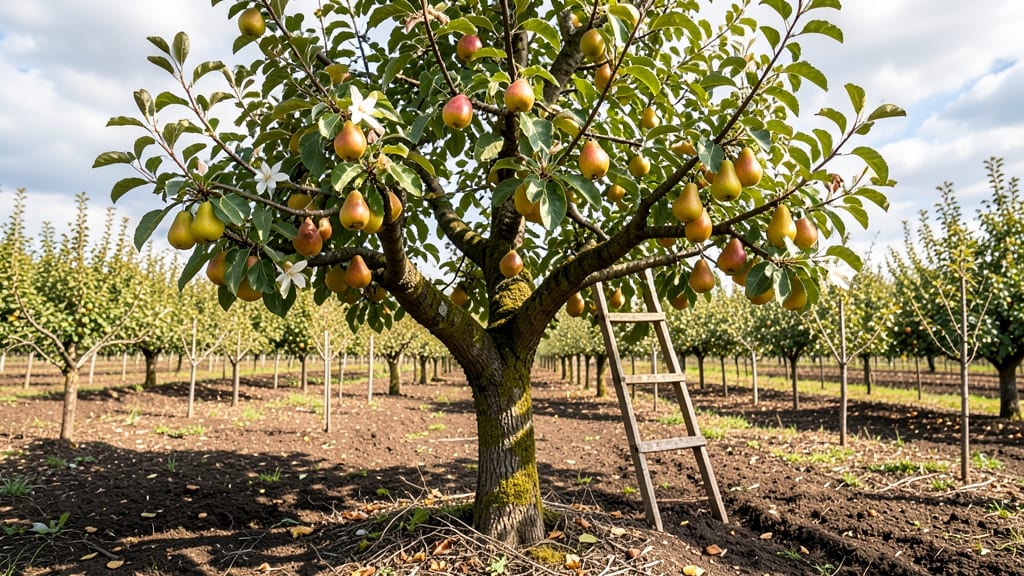
Curious about how tall pear trees grow and whether your backyard can handle one? You’ll be surprised by the range—some varieties stay compact enough for a small garden, while others tower like skyscrapers.
Choosing the right size isn’t just about aesthetics; it affects fruit production, spacing, and even how much pruning you’ll tackle every year.
Pear trees like the 🍐 Bartlett or Bosc can reach 20-50 feet if left unchecked, but dwarf varieties stay between 6-12 feet, perfect for urban gardens or containers.
The difference comes down to rootstock—something most gardeners overlook until it’s too late. Let’s break down the options so you can pick the perfect fit for your space.
Whether you’re dreaming of a backyard orchard or just want a single tree for fresh fruit, size matters. Standard varieties need room to breathe, while dwarf trees thrive in tight spots—but both require the right care to stay healthy.
I’ll show you how to plan for growth, from planting to pruning, so your pear tree becomes a low-maintenance (and delicious) centerpiece.
Ready to avoid the guesswork? We’ll cover everything from spacing rules to pruning tips tailored to each height category. By the end, you’ll know exactly which pear tree will flourish in your yard—and which to skip if you’re short on space.


Pear tree height by variety: dwarf vs standard vs semi-dwarf sizes
Pear trees aren’t one-size-fits-all—some stay compact enough for small yards, while others reach towering heights. The rootstock (the underlying tree onto which the fruit-bearing scion is grafted) determines whether your pear tree will be a dwarf (6-12 ft), semi-dwarf (12-20 ft), or standard (20-40+ ft) giant.
Choosing the right size isn’t just about aesthetics; it impacts fruit production, pruning needs, and even your tree’s lifespan.
For example, a Bartlett pear on a standard rootstock can soar to 30-40 feet, while the same variety grafted onto a dwarfing rootstock like Old Home x Farmingdale will max out at 8-12 feet.
This difference isn’t just about height—it also affects how quickly the tree bears fruit. Dwarf varieties often produce fruit in 2-3 years, while standard trees may take 5-7 years to mature.
Here’s the kicker: Asian pear trees (like Korean or Ume varieties) tend to stay shorter—often 15-25 feet—even on standard rootstock, making them ideal for urban gardens. Meanwhile, European pears (such as Bosc or Anjou) can become monsters if left unchecked, especially in warm climates where growth is uninhibited.
🍐
| Variety | Rootstock | Mature Height (ft) | First Fruit (Years) | Best For |
|---|---|---|---|---|
| Bartlett | Dwarf (OH x F) | 8-12 | 2-3 | Containers, small yards |
| Bartlett | Semi-Dwarf (Q-9) | 15-20 | 3-4 | Backyards, pollination pairs |
| Bosc | Standard (Seedling) | 25-40 | 5-7 | Large properties, orchards |
| Anjou | Dwarf (P.2) | 10-14 | 3 | Urban gardens, patios |
| Asian Pear (Korean) | Semi-Dwarf (P.2) | 15-22 | 4 | Small orchards, mixed borders |
| Seckel | Dwarf (OH x F) | 6-10 | 2 | Containers, fairy gardens |
| Ume (Japanese Plum-Pear) | Standard (Seedling) | 12-18 | 3-5 | Bonsai, small landscapes |
If you’re dreaming of a pear tree in your backyard, consider your space and long-term goals. A dwarf Bartlett will fit neatly in a 5x5 ft container and produce fruit for decades, while a standard Anjou will need 30+ feet of clearance and regular pruning to keep it manageable.
Pro tip: Semi-dwarf varieties strike a balance—ideal for pollination pairs (since pears need cross-pollination) without overwhelming your yard.
Climate plays a sneaky role too. In warm climates like Zone 8-10, pear trees grow 20-30% faster than in cooler regions,
Optimal spacing and planting distance for pear trees by height
Choosing the right spacing for pear trees is just as important as selecting the right variety. A 12-foot dwarf pear tree needs far less room than a 40-foot standard variety, and crowding trees leads to poor fruit production and disease.
Proper spacing ensures airflow, sunlight penetration, and root development—all critical for healthy growth and harvests.
For dwarf pear trees (6-12 ft), aim for 8-10 feet between trees in a row. These compact varieties thrive in small yards or even large containers, but they still need space to avoid root competition.
Semi-dwarf varieties (12-20 ft tall) require 12-15 feet of spacing, while standard pear trees (20-40 ft tall) demand 20-25 feet apart for optimal growth.
| Pear Tree Type | Mature Height | Spacing (ft) | Notes |
|---|---|---|---|
| Dwarf (e.g., 'Hooded', 'Moonglow') | 6-12 ft | 8-10 ft | Ideal for containers or small yards |
| Semi-Dwarf (e.g., 'Bartlett', 'Anjou') | 12-20 ft | 12-15 ft | Balanced for home orchards |
| Standard (e.g., 'Seckel', 'Bosc') | 20-40 ft | 20-25 ft | Requires wide-open spaces |
When planting multiple pear trees in rows, space them 15-20 feet apart between rows to allow for future growth and easy access for pruning and harvesting.
If you're growing pear trees in containers, dwarf varieties can thrive in 15-20 gallon pots, but ensure the container has drainage holes and is placed in full sun.
Wind exposure also plays a role in spacing. In windy areas, increase spacing by 20-30% to prevent branch breakage. For example, a semi-dwarf pear tree in an exposed location might need 18 feet of spacing instead of the standard 15 feet. Always consider your local climate when planning your orchard layout.
For urban gardeners, consider espaliering—training pear trees to grow flat against a fence or wall. This technique works best with dwarf varieties and can reduce required spacing by up to 50%.
Just ensure the tree gets 6+ hours of sunlight daily and is planted 6-8 feet away from the structure for proper airflow.
Finally, remember that rootstock influences spacing. Trees grafted onto dwarfing rootstock (like Quince C) stay smaller, while those on standard rootstock (like Old Home x Farmingdale) grow much taller. Always check the rootstock type when purchasing your tree to plan spacing accurately.