
How To
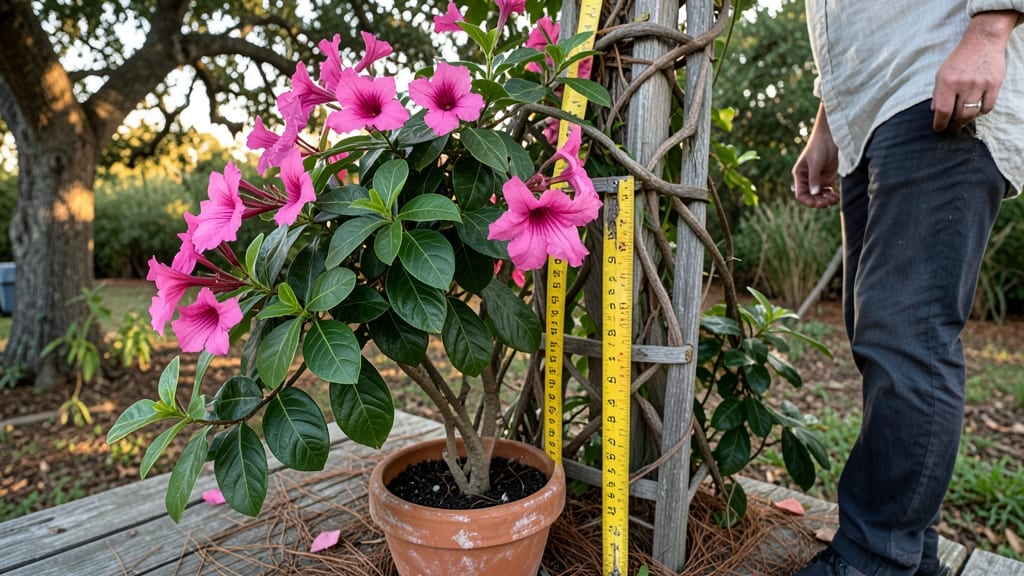
Wondering how tall will Mandevilla grow in your garden? This stunning tropical vine can climb to 10–15 feet with the right conditions, but its height depends on variety, support, and care.
The 🌸 Mandevilla is a showstopper for patios and trellises, but its growth habits might surprise you. Some varieties stay compact, while others become towering vines—learn how to guide its size before planting.
Whether you're working with a small balcony or a spacious yard, I’ll break down the factors that influence its height and share pro tips to keep it manageable.
From pruning techniques to choosing the right support, you’ll discover how to enjoy its vibrant blooms without losing control. Let’s get started!


Mandevilla vine height by variety: growth expectations for popular types
Mandevilla vines are famous for their stunning tropical blooms and rapid growth habits, but their mature height varies dramatically by variety. Without proper planning, you might end up with a vine that overshadows your patio or struggles to reach its full potential.
Let’s break down the height expectations for the most popular types so you can choose the perfect fit for your space.
Most standard Mandevilla varieties reach 10 to 15 feet tall when given ideal conditions—think trellises, arbors, or sturdy fences to climb. However, dwarf varieties (like 'Compact Star') stay between 2 to 5 feet, making them perfect for containers or small balconies.
The key difference? Genetics and pruning habits—some varieties naturally grow taller, while others stay compact unless encouraged to climb.
Here’s what you need to know: Sunlight exposure, soil quality, and pruning frequency all influence how tall your Mandevilla will grow.
For example, 'Alice du Pont'—a classic variety—can shoot up 12 to 15 feet in a single season if left unpruned, while 'Sunset Rouge' typically maxes out at 8 to 10 feet without aggressive training.
The right support structure can also push growth by 30% or more, turning a 5-foot vine into a 10-foot showstopper.
If you’re growing Mandevilla in containers, expect shorter heights—typically 30 to 50% less than their in-ground counterparts. For example, a 10-foot 'Alice du Pont' in the ground might only reach 4 to 6 feet in a 15-gallon pot.
The key is root restriction: smaller pots = slower growth. However, container-grown vines often bloom more profusely because their energy focuses on flowers rather than sprawling roots.
For fastest growth, prioritize full sun exposure, well-draining soil, and regular pruning to encourage upward growth.
In Zone 9 and warmer, Mandevilla can grow 12 to 24 inches per season if happy, while cooler zones (like Zone 8) may see slower growth (6 to 10 inches per year).
Always plant after the last frost (typically mid-April in most regions) to avoid cold damage, which stunts growth.
Pro tip: Pinch back new growth in early spring to encourage bushier, shorter vines. This is especially useful if you’re growing a tall variety like 'Cherry Ann' but want to keep it manageable.
Just trim back 1/3 of the plant in late winter, and you’ll see thicker foliage and more blooms by summer.
One common mistake? Assuming all Mandevilla vines grow the same. While they share similar care needs, their genetic potential varies wildly. For instance, 'Amethyst Falls' is bred to stay shorter and bushier, while 'Alice du Pont' is a climber at heart.
Match your support structure to the variety—trellises for tall types, cages for bushier ones, and containers for dwarfs.
Ready to pick your perfect Mandevilla? Start by asking: How much vertical space do I have? If you’re working with limited height, opt for dwarf varieties or prune aggressively. For dramatic vertical gardens, choose standard types and invest in a strong trellis or arbor.
Either way, with the right variety and care, you’ll have a stunning vine that fits your space like a glove. 🌸
How support structures affect Mandevilla vine height and spread
Mandevilla vines thrive when given the right support structure—it’s the difference between a sprawling ground cover and a stunning vertical display. Without proper support, your Mandevilla may grow wider than tall, reaching 10-15 feet wide but only 3-5 feet high in its first year.
But with the right trellis, arbor, or cage, you can encourage 30-50% taller growth while keeping it contained and manageable.
The type of support you choose directly impacts how your vine climbs, spreads, and even blooms. For example, a trellis encourages upward growth, while a cage allows for a bushier, more compact form.
Understanding these dynamics helps you plan your garden layout and avoid overgrowth disasters—especially in small spaces like balconies or patios.
Let’s break down how different support structures influence Mandevilla vine height and spread, so you can pick the perfect setup for your space and aesthetic goals.
🌿 How Support Structures Shape Mandevilla Growth
- 🪴 Trellis or Arbor: Encourages vertical growth (up to 10-15 feet tall) while keeping spread controlled. Ideal for fences, pergolas, or arbors.
- 🪣 Cage or Frame: Promotes a bushier, compact form (3-6 feet tall/wide). Perfect for containers or small gardens where height isn’t a priority.
- 🪵 Stakes or Spikes: Guides growth in a specific direction (e.g., along a wall or trellis). Best for training vines upward without full support.
- 🌍 No Support (Ground Cover): Leads to wider spread (up to 10 feet wide) but shorter height (3-5 feet). Only ideal for large, open spaces.
- 🪵 Wire or String: Lightweight option for temporary support (e.g., string between posts). Works well for seasonal planting or renters.
For instance, my ‘Alice du Pont’ Mandevilla grew 12 feet tall in one season when trained on a 6-foot trellis, but the same plant sprawled 8 feet wide when left unsupported in a container.
The key is to match your vine’s natural growth habits with the right structure—whether you want a tall, dramatic climb or a controlled, bushy display.
If you’re working with limited space, a cage or small trellis can help manage height while still allowing for plenty of blooms. Just remember: Prune regularly to encourage upward growth when using vertical supports. Without pruning, even supported vines can become top-heavy and flop over!
Pro tip: Install your support structure at planting time to avoid disturbing roots later. This gives your Mandevilla a head start on climbing and reduces stress on the plant as it matures.
And if you’re growing in containers, choose a heavy-duty cage—Mandevilla vines can get surprisingly heavy when fully loaded with blooms!