
How To
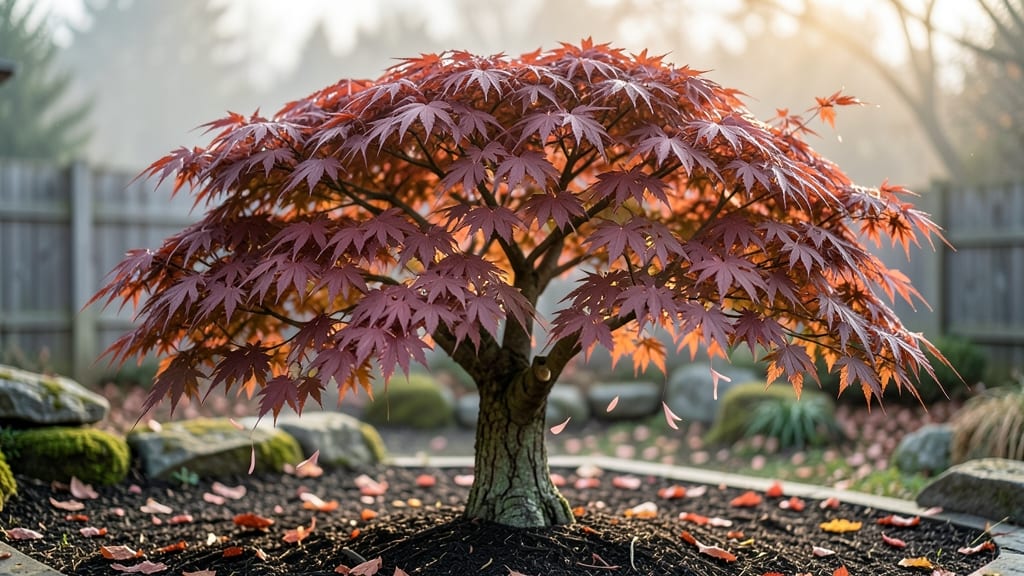
If you're wondering just how tall your Japanese Maple 🌿 could grow, the answer depends more on the variety you choose than you might think.
Some stunning cultivars like 'Bloodgood' reach towering heights of 20-25 feet, while others like 'Shishigashira' stay compact at just 6-8 feet—making them perfect for small gardens or containers.
This height variation means you can find the perfect Japanese Maple for any space, whether you're working with a cozy patio or a sprawling backyard. The key to managing their growth lies in understanding how different varieties mature, so you can plan your garden layout with confidence.
In this guide, I'll break down exactly what to expect from popular Japanese Maple varieties, including how factors like pruning and sunlight affect their ultimate size. You'll discover which types stay manageable and which ones need room to grow—so you can make the best choice for your outdoor vision.
Ready to pick the perfect tree for your space? Let's explore the height ranges and care tips that will help your Japanese Maple thrive for years to come.


Japanese maple height by variety: small vs large growth expectations
Japanese maples (Acer palmatum) are famous for their stunning foliage and compact growth—but their mature size can vary dramatically depending on the variety. Some stay small enough for a patio planter, while others reach tree-like proportions.
Knowing these differences helps you choose the perfect fit for your garden layout. Below, I’ll break down 12+ popular cultivars, their mature heights, and growth rates to help you plan spacing and pruning needs.
For example, the 'Bloodgood' variety is a standard-size Japanese maple, typically reaching 15–25 feet at maturity, while 'Dream Catcher' stays a manageable 6–10 feet. These differences aren’t just about aesthetics—they also affect care requirements, like pruning frequency and winter protection needs.
Let’s dive into the specifics so you can make an informed choice.
🌿
| Variety | Mature Height (ft) | Growth Rate (ft/year) | Notes |
|---|---|---|---|
| Bloodgood | 15–25 | 1–2 | Bold red foliage; needs space |
| Black Lace | 10–15 | 1 | Dark purple-black leaves; slower growth |
| Dream Catcher | 6–10 | 0.5–1 | Weeping branches; great for containers |
| Coral Bark | 15–20 | 1–1.5 | Striking red-orange bark; winter interest |
| Shishigashira | 4–6 | 0.3–0.5 | Dwarf variety; rounded shape; ideal for small gardens |
| Empress Wu | 5–8 | 0.4–0.6 | Green foliage; upright growth; low-maintenance |
| Viridis | 6–10 | 0.5–1 | Bright green foliage; vigorous grower |
| Moonrise | 10–15 | 1 | Pinkish-red foliage; slow to moderate growth |
| Seiryu | 6–8 | 0.5 | Dragon-scale foliage; compact and slow-growing |
| Orange Dream | 8–12 | 0.7–1 | Orange foliage; weeping habit; needs support |
How to estimate your Japanese maple’s future height before plantingPredicting your Japanese maple’s mature height starts with understanding its rootstock type—whether it’s field-grown (faster growth) or containerized (slower, more controlled). Field-grown saplings often reach full height 20% faster than containerized ones, so if you’re short on space, opt for the latter. For example, a Bloodgood maple from a container may stay under 15 feet for years longer than its field-grown counterpart. Next, consider your USDA hardiness zone. Japanese maples thrive in zones 5-8, but colder climates (like zone 5) can stunt growth by 10-15% compared to warmer zones (zone 7-8). If you’re in a colder zone, expect slightly slower growth—3-5 feet per year instead of the typical 5-8 feet. Soil drainage also plays a role: Poor drainage can limit root expansion, capping height at 60-70% of expected size. 🌱 Key Takeaway: Height Estimation FormulaMature Height (ft) = Variety’s Avg. Height × Rootstock Factor × Climate Adjustment Rootstock Factor: Containerized = 0.8 | Field-grown = 1.2 Climate Adjustment: Zone 5 = 0.85 | Zone 7-8 = 1.0 Example: A Coral Bark (avg. 20 ft) in zone 7 with containerized rootstock = 20 × 0.8 × 1.0 = 16 ft. To further control height, plant your Japanese maple in a narrower space—like a small island bed or container—which restricts root spread and slows vertical growth. Prune late winter (just before buds swell) to shape the tree and encourage bushier growth. Avoid heavy pruning in summer, as this can spur vigorous late-season growth that may exceed your height goals by 1-2 feet per year. For container-grown maples, choose a pot 2-3 times wider than the root ball to delay outgrowing your space. Elevate containers to improve drainage, which reduces stress and keeps growth 10-20% slower than in-ground plants. Mulch annually with 2-3 inches of organic mulch (like shredded bark) to retain moisture and encourage steady, controlled growth rather than rapid vertical shoots. If you’re planting near a fence or wall, position the tree 3-5 feet away to avoid root competition that could stunt height. Monitor growth annually: Measure from the base to the highest branch in early spring (before new growth). If it exceeds your target by more than 1 foot, prune back 1/3 of the longest branches to redirect energy to lateral growth. Remember, patience is key—Japanese maples grow slowly (1-2 feet per year for dwarf varieties). With the right variety, rootstock, and care, you can keep a 20-foot Bloodgood at a manageable 12 feet for decades. Start small, plan ahead, and your maple will reward you with stunning foliage without overpowering your space. 🌿 |