
Plants
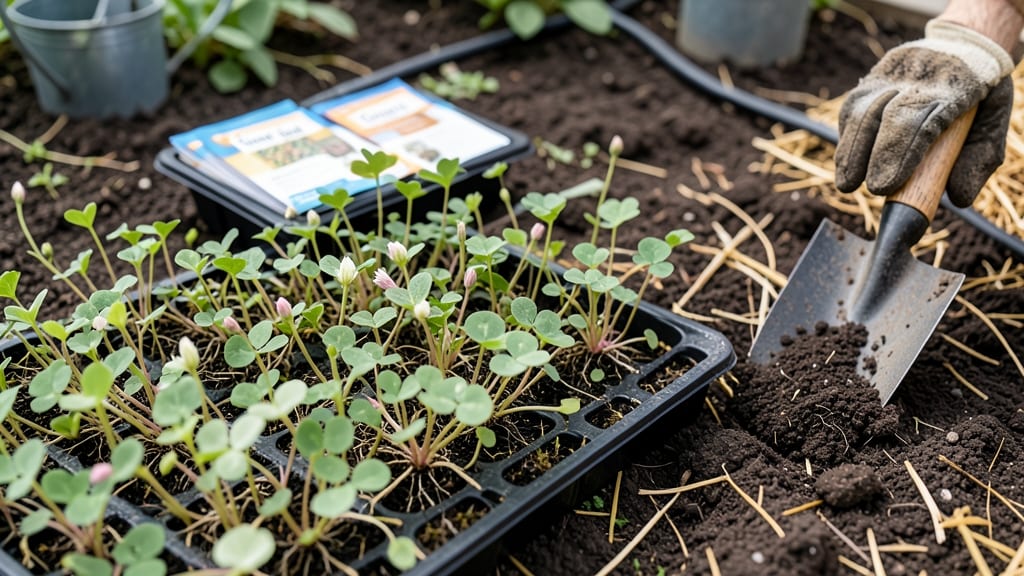
Timing your clover planting in spring isn’t just about the calendar—it’s about catching that perfect window when soil temperatures and frost dates align for fast germination.
Miss the mark, and you might end up with slow starts or even failed seeds, no matter how much care you put into the rest.
For most gardeners in USDA Zone 6, early to mid-spring is the sweet spot—typically 4-6 weeks before your last frost date. But here’s the catch: soil temperature matters more than the date on your calendar.
If you plant too early, cold soil can stall germination, while waiting too long might mean clover struggles to establish before summer heat sets in.
I’ve learned the hard way that soil temp secrets make all the difference—aim for 50°F or warmer to give your clover seeds the best shot at sprouting within 10-14 days.
Whether you’re growing white clover for pollinators or red clover for nitrogen-rich soil, getting this right is the key to a thriving patch.
Ready to unlock the secrets? Let’s break down exactly when to plant, how to prep your soil, and which clover varieties thrive with early vs. late spring timing—so you can enjoy lush, blooming clover all season long.
Optimal soil temperature ranges for planting clover in spring
Clover seeds won’t sprout until your soil reaches the right temperature—too cold, and they’ll rot; too hot, and they’ll dry out. The ideal soil temperature range for planting clover in spring is between 40°F and 60°F, with slight variations depending on the variety.
White clover thrives at the cooler end of this spectrum, while red clover prefers slightly warmer soil.
Northern climates (USDA zones 3–6) should wait until soil warms to at least 50°F before planting, typically in late April or early May. Southern regions (zones 7–10) can start as early as February or March when soil temperatures stabilize above 45°F.
Always check with a soil thermometer to avoid guessing.
Here’s how to test your soil temperature accurately: Insert a soil thermometer 2–3 inches deep in the ground (where clover roots will grow) and wait 10 minutes for a stable reading.
Early mornings are best—soil cools overnight, and readings will be more reliable. If your thermometer shows below 40°F, wait 1–2 weeks before planting.
Clover seeds are particularly sensitive to frost damage, so never plant before your last frost date. Even if soil temps are ideal, a surprise freeze can kill seeds. Check your local USDA frost map and plan accordingly—most regions see their last frost between mid-March and mid-May.
For white clover, aim for soil temps between 40°F and 50°F—this variety germinates fastest in cooler conditions. Red clover, on the other hand, prefers 50°F to 60°F and may struggle if planted too early. Alsike clover falls in the middle, thriving at 45°F to 55°F.
| Clover Type | Ideal Soil Temp | Best Planting Window | Notes |
|---|---|---|---|
| White Clover | 40°F–50°F | Late March–April | Tolerates cooler soil; great for early spring. |
| Red Clover | 50°F–60°F | April–early May | Needs warmer soil; avoid planting too early. |
| Alsike Clover | 45°F–55°F | Late March–April | Moderate tolerance; adaptable to most spring temps. |
If you’re in a transition zone (like zones 6–7), aim for late April planting to balance soil warmth and frost risk. For example, in St. Louis (zone 6), soil temps hit 50°F around mid-April, making it safe to plant white clover then.
In Atlanta (zone 8), you can start as early as February for red clover.
Pro tip: Use black plastic mulch to warm soil faster if you’re eager to plant early. Lay it down 1–2 weeks before sowing to raise soil temps by 5–10°F.
Just remove it after planting to avoid overheating seeds. Alternatively, cover seeds with a lightweight row cover to protect them from late frosts while they germinate.
Once your soil hits the right temperature, act fast—clover seeds lose viability quickly in dry conditions. Keep them in a cool, dark place (like your fridge) until planting day to maintain freshness.
If you’re unsure about timing, err on the side of waiting—a few extra weeks of warmth will do more good than rushing too soon.
Remember, consistent moisture is just as critical as temperature. After planting, water gently but deeply to keep soil evenly moist until seeds sprout (usually within 10–21 days). A light misting twice daily works best until germination occurs.
Optimal soil temperature ranges for planting clover in spring
Clover seeds need the right soil temperature to germinate quickly, and spring planting depends on more than just the calendar. Cool-season clovers like white and red clover thrive when soil temps range between 40°F and 60°F.
If you plant too early, seeds may rot; too late, and they’ll struggle to establish before summer heat sets in.
Soil temperature matters more than air temperature.
A soil thermometer ($10 at garden centers) is your best tool to check depths of 1–2 inches, where clover roots first grow. Northern climates (USDA Zones 3–6) often hit ideal temps by late March or early April, while southern regions (Zones 7–10) may wait until February or March.
Here’s how different clover types respond to soil temps:
| Clover Type | Ideal Soil Temp Range | Best Planting Window | Regional Note |
|---|---|---|---|
| White Clover | 45°F–55°F | Early spring (March–April) | Cold-hardy; great for Zones 3–8 |
| Red Clover | 50°F–60°F | Mid-spring (April–May) | Prefers warmer soil; best for Zones 5–10 |
| Alsike Clover | 40°F–50°F | Late winter–early spring (Feb–March) | Tolerates cooler soils; ideal for Zones 4–7 |
If your soil is below 40°F, wait or use a black plastic mulch to warm it faster. For above 60°F, shade young seedlings with row covers to prevent stress. Morning sunlight is ideal for checking temps—soil warms slower then.
Pro tip: Test soil moisture alongside temperature. Clover seeds need consistent moisture but hate soggy soil. Aim for damp, not drenched, conditions. A simple finger test (1 inch deep) tells you if your soil is ready.
Timing isn’t just about the clock—it’s about the hidden warmth beneath your feet. With the right soil temp, your clover will germinate in 7–14 days, giving you a lush, nitrogen-rich lawn or garden cover by summer. 🌱