
Flowers
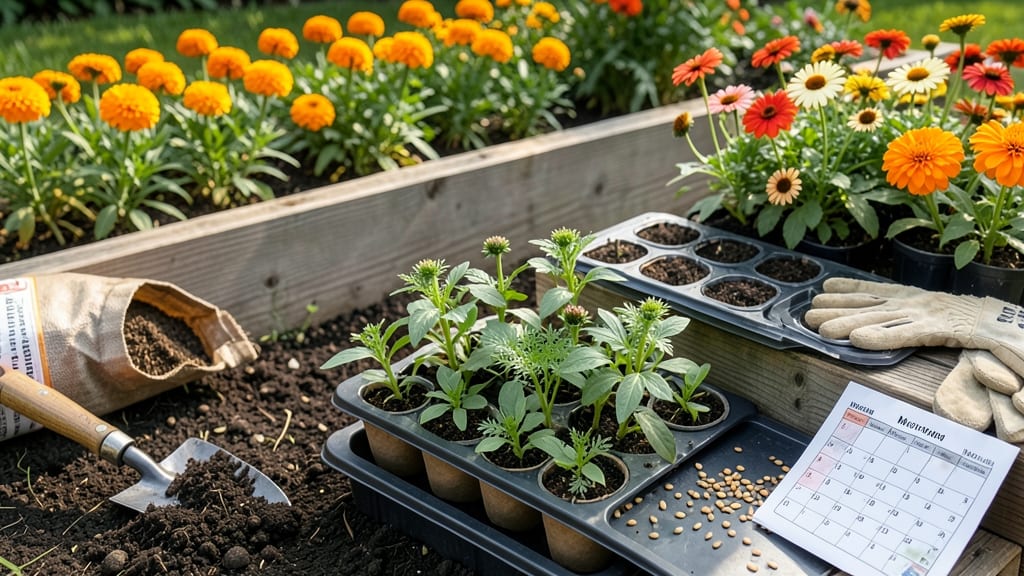
Indiana flower seed planting calendar by hardiness Zone (5 & 6)
Indiana spans USDA Zones 5b and 6a, meaning your planting timeline should account for last frost dates around April 15 and first frosts in late October. Zone 6a (southern Indiana) enjoys a slightly longer growing season, while Zone 5b (northern Indiana) faces earlier frost risks.
To maximize blooms, align your planting with soil temperatures and seasonal shifts—cool-season flowers like pansies thrive in early spring, while warm-season favorites such as zinnias need warmer soil.
For spring planting, start indoor seeds 6-8 weeks before the last frost (around February 15 for Zone 5b, March 1 for Zone 6a). Direct-sow hardy annuals like calendula and snapdragons as soon as soil reaches 40°F (early March).
Wait until soil hits 60°F (mid-April to early May) for heat-loving seeds like marigolds and sunflowers.
Fall planting offers a second chance for cool-season blooms. Sow pansies, sweet alyssum, and stock from late July to early September, ensuring they establish roots before first frost.
Perennials like black-eyed Susans can be direct-sown in fall for early spring blooms, but avoid planting tender annuals after August 15.
Here’s your zone-specific planting roadmap, broken down by flower type and season to simplify decision-making:
| Planting Window | Zone 5b (Northern IN) | Zone 6a (Southern IN) | Soil Temp | Examples |
|---|---|---|---|---|
| Spring (Cool-Season) | Feb 15 (indoor) / Mar 15 (outdoor) | Mar 1 (indoor) / Mar 20 (outdoor) | 40–50°F | Pansies, Snapdragons, Calendula |
| Spring (Warm-Season) | Apr 20–May 10 | Apr 10–May 1 | 60–70°F | Zinnias, Sunflowers, Marigolds |
| Fall (Cool-Season) | Jul 20–Aug 15 | Jul 30–Sep 1 | 50–60°F | Sweet Alyssum, Stock, Pansies |
| Perennials (Spring/Fall) | Apr 1–May 15 / Sep 1–15 | Mar 20–Apr 30 / Sep 10–30 | 50–60°F | Coneflowers, Black-Eyed Susans |
Pro tip: Use a soil thermometer to confirm readiness—warm-season seeds won’t germinate in cold soil, even if calendar dates align. For example, tomato flowers (yes, they count!) need soil at 55°F+ to thrive.
In Zone 5b, wait until May 1 to avoid frost damage; in Zone 6a, you can push to April 20.
Indoor starting extends your season. Begin delphiniums and hollyhocks indoors in February for Zone 5b or March for Zone 6a. These tall perennials (up to 6 feet) need early starts to beat Indiana’s short growing season. Harden off seedlings by mid-April for Zone 6a or late April for Zone 5b.
Don’t overlook fall-planted bulbs like tulips and daffodils, which should hit the ground by October 1 in Zone 6a or September 15 in Zone 5b. Their roots establish in cool soil, ensuring spring blooms before summer heat sets in.
For annuals like cosmos, direct-sow in late May—they self-seed prolifically and tolerate heat.
Remember: Indiana’s microclimates vary. Gardens near Lake Michigan (Zone 6a) stay warmer longer, while inland areas (Zone 5b) may face late May frosts. Monitor local forecasts and adjust your timeline by 1–2 weeks if needed. A row cover can protect tender seedlings from unexpected 28°F nights in early spring.
For a nonstop bloom schedule, stagger plantings every 2 weeks from March to September. This ensures continuous color from early spring pansies to late-fall mums. Start with cool-season flowers in March, then transition to warm-season varieties by May, and finish with fall favorites in August.
How to adjust planting times for Indiana’s unpredictable weather patterns
Indiana’s weather can throw curveballs—one day it’s 60°F and sunny, the next it’s a 28°F surprise frost. To protect your flower seeds and seedlings, I’ve learned to adjust planting times based on local forecasts and microclimates.
Start by checking your last frost date (typically April 15 in most of Indiana) and then add a 2-week buffer for safety.
For heat-loving annuals like zinnias or marigolds, wait until the soil stays consistently above 60°F. Use a soil thermometer to confirm—this usually lands in late May in northern Indiana. If you’re in Zone 6a, you might even push it to early June for extra protection against late frosts.
⚠️ Late Frost Warning
Indiana’s late spring frosts (even in May!) can wipe out tender seedlings. Use row covers or wait until May 15 for most areas. For cold-hardy flowers like pansies or snapdragons, plant 4-6 weeks before last frost (early March) to beat the heat.
If you’re planting fall flowers like cosmos or sunflowers, aim for late July to early August. These seeds need 60-70°F soil to germinate, but they’ll mature quickly before first frost (usually October 20).
For perennials like coneflowers or black-eyed Susans, sow seeds in late summer (August) so they establish roots before winter.
Succession planting is my secret weapon for Indiana’s unpredictable summers. Instead of planting all your marigold or zinnia seeds at once, stagger them every 2 weeks from May to July.
This ensures continuous blooms even if a heatwave or drought hits. Pair heat-tolerant varieties like lantana or gaillardia with shade-loving flowers like impatiens for a resilient garden.
Don’t forget to monitor your garden’s microclimates. South-facing beds warm up faster, while north-facing spots stay cooler. If your yard has low spots that hold frost longer, plant cold-hardy flowers there first. Use a garden journal to track which areas thrive—and which need adjustments next year.
Finally, invest in a weather alert app for frost or heatwave warnings. I’ve saved entire seed batches by covering plants with frost blankets or moving pots to shaded areas during 90°F+ days. With these tweaks, you’ll turn Indiana’s weather whims into a garden advantage.