
Plants
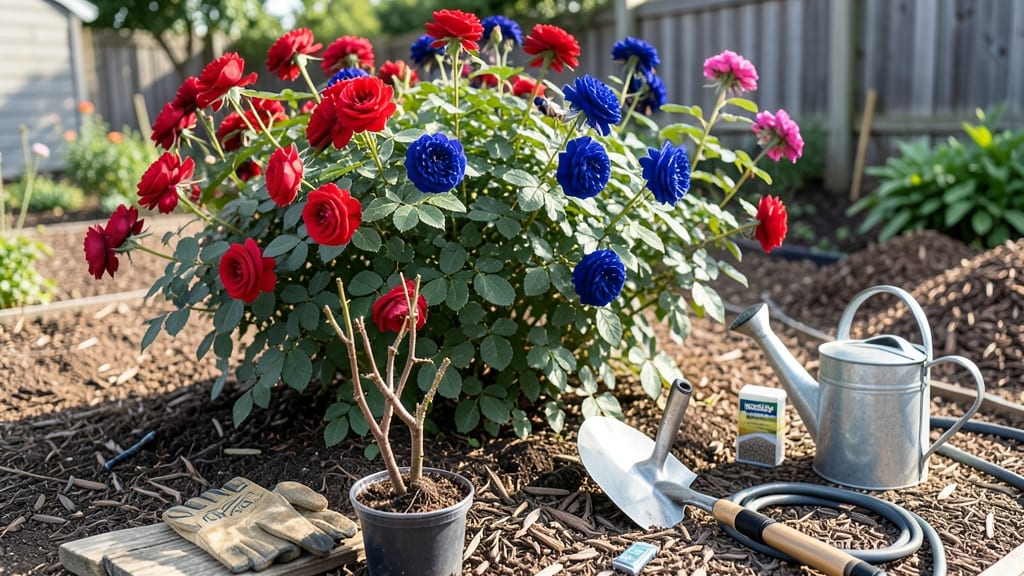
Timing is everything when you're planting Knockout Roses in North Texas—get it wrong, and your 🌹 might struggle through the brutal summer heat or freeze before taking root.
The secret to lush, continuous blooms lies in planting during the 4-week window before or after our region's last frost date, typically between late October and early March.
You might think spring is the only time to plant, but fall actually gives your roses a head start. Cooler temperatures and consistent moisture help roots establish before summer's intensity hits. I've seen firsthand how plants thrived when I followed this schedule, while others planted too early faced frost damage.
North Texas's USDA Zone 8a climate means we have to work with specific frost dates—usually around mid-February for our last frost. That means your planting window opens in late October and closes by early March.
Let me walk you through the exact week-by-week timing that's worked for me and my neighbors.
We'll cover soil prep, frost protection, and even how to tell when your roses are ready to handle our summer heat. With these proven steps, you'll have Knockout Roses that bloom beautifully year after year, no matter what North Texas throws at them.
North Texas frost dates and ideal planting windows for knockout roses
North Texas's USDA Zones 8a-9b create a unique challenge for Knockout Roses—too early, and frost zaps tender roots; too late, and summer heat stresses new plants. The 4-week window between mid-October and mid-November offers the perfect balance for fall planting, while late February to early March works for spring.
These timelines align with the region's average last frost (Feb 15) and first frost (Nov 15), giving roots time to establish before extreme temperatures arrive.
Why these windows? Fall planting lets roses develop roots in cool soil before summer heat, while spring planting avoids winter dormancy stress. For example, planting in October (Zone 8a) gives roots 6-8 weeks to strengthen before winter, while March planting ensures blooms start by summer.
The key is soil temperature—aim for 60-70°F at planting time.
Here’s how North Texas’s microclimates affect timing: Dallas (Zone 8a) has earlier frosts than Lubbock (Zone 8b), so adjust by 1-2 weeks. For instance, Dallas gardeners should plant by November 1, while Lubbock can extend to November 15.
Spring plantings in Zone 9b (e.g., Amarillo) can start as early as February 1 due to later frosts.
Pro tip: Use local frost data from the National Weather Service or Texas A&M AgriLife Extension to fine-tune your schedule. For example, a late frost in April (like in 2017) can delay spring planting by 2-3 weeks. Always have a row cover ready for unexpected cold snaps.
Knockout Roses thrive when planted in well-draining soil with 6+ hours of sun, but North Texas’s clay-heavy soils and alkaline pH (7.5-8.5) often need amendments. Aim for a slightly acidic pH (6.0-6.5) by mixing in compost or peat moss before planting. This adjustment is critical—alkaline soil locks out essential nutrients like iron, leading to yellow leaves despite healthy growth.
Another local consideration: irrigation methods. North Texas’s drought conditions mean newly planted roses need deep watering (1-2 gallons per plant) 2-3 times per week for the first month. Use drip irrigation or soaker hoses to keep roots moist without wetting foliage (which invites black spot disease).
Mulch with 2-3 inches of organic mulch to retain moisture and regulate soil temperature.
For container planting, larger pots (15+ gallons) are ideal to prevent root-bound stress in North Texas’s intense summer heat. Place containers in protected microclimates, like near south-facing walls, to extend the growing season.
In containers, water every 2-3 days during summer, as potted soil dries out faster than in-ground soil.
Let’s break down the exact planting windows by zone and season to help you choose the best time for your location.
| Zone | Fall Planting Window | Spring Planting Window | Soil Temp Goal | Key Consideration |
|---|---|---|---|---|
| 8a (Dallas, Waco) | Oct 15 - Nov 1 | Feb 28 - Mar 15 | 60-70°F | Early frost risk |
| 8b (Fort Worth, San Angelo) | Oct 20 - Nov 10 | Feb 20 - Mar 10 | 60-70°F | Moderate frost risk |
| 9a (Amarillo, Lubbock) | Oct 25 - Nov 15 | Feb 1 - Mar 5 | 60-70°F | Later frost dates |
| 9b (Midland, Odessa) | Nov 1 - Nov 20 | Jan 20 - Feb 15 | 60-70°F | Mild winters |