
Trees
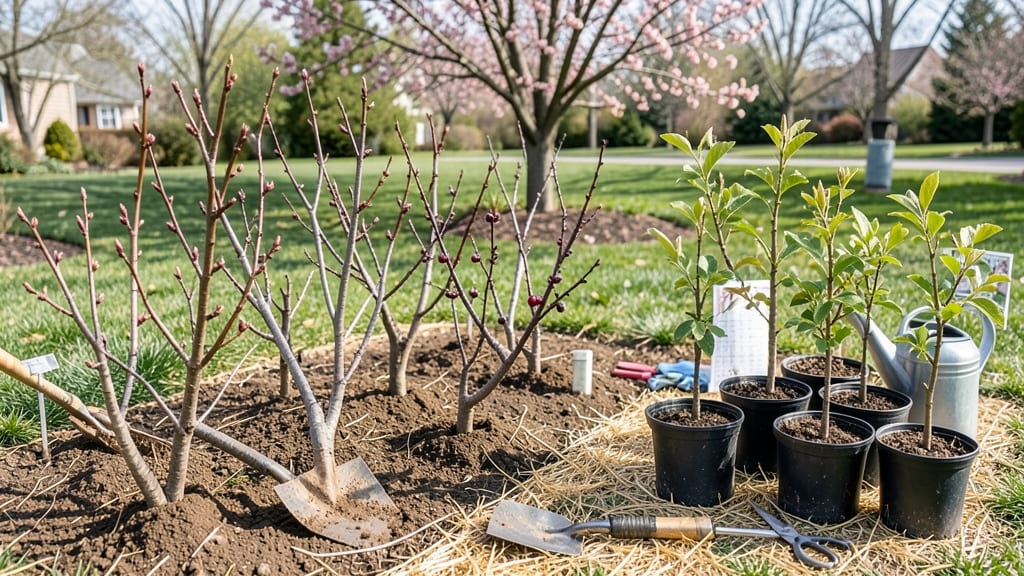
Timing your 🍎 fruit tree planting in Massachusetts isn't just about the calendar—it's about outsmarting the state's unpredictable frost pockets and coastal winds. Plant too early, and a late freeze could kill your sapling before it even takes root.
Too late, and your tree might struggle to establish strong roots before winter sets in.
Most Massachusetts gardeners know spring is the sweet spot, but the 5b-6b zones hide subtle differences that can make or break your orchard.
Whether you're in Boston's urban heat island or the chillier Berkshires, knowing exactly when to dig that hole could mean the difference between a thriving orchard and years of disappointment.
I'll break down the science behind Massachusetts' planting windows—why late winter through early spring works best for bare-root trees, and when container-grown varieties give you more flexibility.
You'll also discover how to prep your soil, choose the right varieties for your microclimate, and avoid the costly mistakes that trip up even experienced gardeners.
Ready to plant with confidence? Let's get your fruit trees off to the strongest possible start—because in Massachusetts, timing really is everything.
Massachusetts microclimates and their ideal planting windows for fruit trees
Massachusetts spans USDA Zones 5b-6b, but its microclimates create wildly different conditions for fruit trees. Coastal areas like Cape Cod experience milder winters, while inland Pioneer Valley and Berkshires face harsher frosts.
Highland regions like Mount Greylock can drop 20°F colder than Boston. These variations mean your planting window could shift by 4-6 weeks depending on location.
For coastal Massachusetts, the ideal planting window stretches from late February to early April. Warmer ocean currents delay frost, giving young roots a head start. In contrast, inland areas should wait until mid-April to early May to avoid late spring frosts that can kill emerging buds.
Highland regions often need to plant 2-3 weeks later than lowland areas.
Soil preparation is just as critical as timing. Massachusetts' native soils are often acidic and compacted, requiring amendment with compost and lime (for apples and pears) or sulfur (for blueberries).
Test your soil's pH between 6.0-7.0 for most fruit trees, adjusting 2-3 months before planting. This gives amendments time to integrate fully.
| Microclimate | Ideal Planting Window | Key Considerations | Best Varieties |
|---|---|---|---|
| Coastal (Zone 6b) | Late February - Early April | Milder winters, salt spray tolerance, well-drained sandy soil | Liberty apple, Haralson pear, Jersey blueberry |
| Inland Lowlands (Zone 6a) | Mid-April - Early May | Frost pockets, richer loam soil, urban heat islands | Honeycrisp apple, Bartlett pear, Stanley cherry |
| Highland (Zone 5b) | Late April - Early June | Short growing season, acidic soil, high wind exposure | Enterprise apple, Arctic Fancy pear, Early Blue blueberry |
| Urban Heat Islands | Early April - Mid-May | Warmer microclimate, limited space, pollution sensitivity | Dwarf varieties (e.g., Columnar apple, Patio pear) |
For bare-root trees, the earliest planting window is ideal—roots establish faster in cool, moist soil before buds swell. Container-grown trees offer more flexibility, allowing planting until early June in coastal areas, but avoid planting after mid-June anywhere in the state to prevent transplant shock before winter.
Apple and pear trees thrive when planted 2-3 weeks before your area's last average frost date. For Boston (Zone 6a), this typically means mid-April, while Western MA (Zone 5b) should wait until late April.
Cherry trees, however, need chilling hours—plant them in early spring to ensure they receive adequate cold exposure.
Blueberries demand acidic soil (pH 4.5-5.5) and should be planted in early spring or fall (4-6 weeks before first frost). Their shallow root systems benefit from mulching with pine needles, which gradually acidifies the soil.
In coastal areas, fall planting is riskier due to salt spray damage, so spring is preferred.
Urban gardeners face unique challenges like limited space and pollution. Dwarf varieties like Columnar apples or Patio pears are perfect for small yards. Plant these in early spring and use windbreaks to protect against urban wind tunnels.
Container growing extends options—just ensure pots are at least 24 inches deep and use well-draining soil mixes.
Always check your local Cooperative Extension Service for last frost dates—they update annually based on weather patterns. For example, 2023 saw later frosts in many areas, delaying ideal planting by 10-14 days.
Adjust your timeline accordingly, and consider row covers for early spring plantings to protect young trees from unexpected cold snaps.
Remember: Root growth is the priority in the first year. A tree with a strong root system will recover better from summer droughts and winter freezes. Prioritize soil health and proper timing over rushing to plant—your orchard's future depends on it.
Bare-root vs. container-grown fruit trees: which planting method works best in MA?
Choosing between bare-root and container-grown fruit trees in Massachusetts can feel overwhelming, but the right pick depends on your local climate and planting timeline. Bare-root trees—sold without soil—are cheaper and easier to plant, but they demand precise timing.
Container-grown trees offer flexibility but may struggle with transplant shock in late spring. Let’s break down which method thrives in MA’s short growing season.
For bare-root trees, the window is narrow: plant them between late winter and early spring (February through April) before buds swell. This gives roots time to establish before summer heat.
In contrast, container-grown trees can go in the ground from early spring to early fall, but avoid planting in peak summer heat (June–August) when roots can dry out quickly. If you’re in Zone 5b–6b, timing is critical—miss it, and your tree may struggle to adapt.
Here’s how to decide based on your Massachusetts microclimate:
| Factor | Bare-Root Trees | Container-Grown Trees |
|---|---|---|
| Best Planting Time | Feb–April (dormant season) | Spring (March–May) or Fall (Sept–Oct) |
| Root Establishment | Faster (no soil disruption) | Slower (roots may be root-bound) |
| Cost | Lower (no pot or soil) | Higher (includes pot and soil) |
| Transplant Shock Risk | Low (if planted correctly) | Moderate (root-bound trees struggle) |
| Best For | Early spring planters, budget-conscious gardeners | Late spring/fall planters, urban gardeners |
If you’re in coastal Massachusetts (e.g., Cape Cod, Boston), container-grown trees may handle salt spray better, but bare-root varieties like dwarf apple trees often recover faster from early spring frosts. Inland areas (e.g., Worcester, Springfield) benefit from bare-root planting to avoid summer drought stress.
For urban heat islands, container-grown trees planted in late fall can outperform bare-root options, which may dry out too quickly in city soils.
Pro tip: If you miss the bare-root window, opt for container-grown trees but soak their roots for 1–2 hours before planting to reduce shock. For both methods, amend soil with compost and water deeply after planting—this is non-negotiable in MA’s rocky, acidic soils. 🌱
Remember, dwarf varieties (like Columnar apples) adapt better to container growing, while standard-size trees (e.g., Liberty apples) thrive as bare-root in well-drained soil. Choose based on your space and patience—and always plant before buds break! ✂️