
Plants
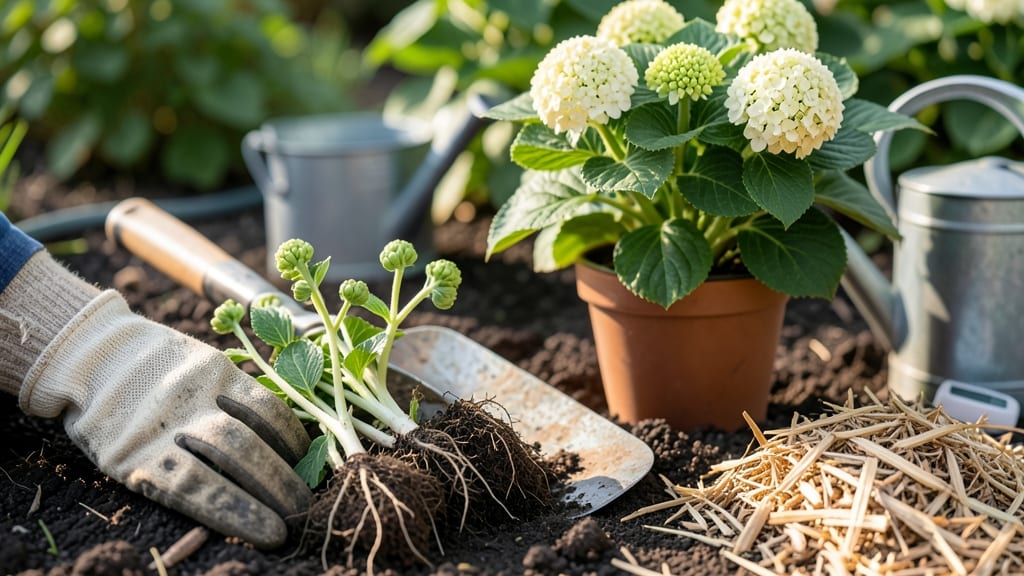
Timing your hydrangea planting in Minnesota isn’t just about following a calendar—it’s about outsmarting 4a-5b frost dates and giving your 🌸 shrubs the best shot at thriving. Plant too early, and a late frost could zap tender roots before they establish.
Too late, and you’ll miss the sweet spot for root growth before summer heat sets in.
Most gardeners know spring is ideal, but did you know fall planting can actually work better in Minnesota? The key is understanding your hydrangea variety’s hardiness and your local microclimate.
Whether you’re in Minneapolis or Duluth, knowing when to get those roots in the ground makes all the difference between wilted disappointment and lush, blooming shrubs by summer.
I’ll walk you through the exact planting windows for Minnesota’s most popular hydrangeas—bigleaf, panicle, oakleaf, and smooth—plus how to prep your soil and protect young plants from our infamous late spring frosts. No more guessing games about whether your hydrangeas will survive the season.
Ready to transform your yard into a bold, colorful display? Let’s dive into the science-backed timing that’ll have your hydrangeas thriving year after year, no matter what Minnesota throws at them.
Minnesota hydrangea planting zones: last-frost dates by variety
Minnesota’s USDA Zones 3-5 bring unique challenges for hydrangea lovers—frost can arrive as early as April 15 in northern areas or linger until May 20 in southern regions. But don’t let that scare you off!
With the right timing, you can grow bigleaf, panicle, oakleaf, and smooth hydrangeas successfully. The key is matching your variety’s hardiness with your local last-frost date.
Most Minnesota gardeners aim to plant between April 15 and May 15 for spring planting or September 1 to September 30 for fall. However, your microclimate (urban heat islands, wind exposure, or low-lying areas) can shift these dates by 1-2 weeks.
For example, Duluth’s average last frost is May 10, while Rochester’s is closer to May 15.
Here’s how to align your planting with Minnesota’s frost-free averages and hydrangea types:
| Variety | USDA Zone | Best Planting Window | Notes |
|---|---|---|---|
| Bigleaf Hydrangea | 4-5 | May 1-15 (spring) or Sept 1-15 (fall) | Needs well-draining soil; avoid late spring frosts |
| Panicle Hydrangea | 3-5 | April 20-May 10 (spring) or Sept 15-30 (fall) | Most cold-hardy; tolerates Zone 3 with mulch |
| Oakleaf Hydrangea | 4-5 | May 1-15 (spring) or Sept 1-15 (fall) | Loves morning sun; protect young leaves from frost |
| Smooth Hydrangea | 3-5 | April 20-May 10 (spring) or Sept 15-30 (fall) | Drought-tolerant; plant in sheltered spots |
For container-grown hydrangeas, you can push the envelope slightly—planting as early as April 1 in southern MN or up to May 20 in northern areas.
Containers warm up faster in spring, giving roots a head start. Just be prepared to cover young plants if frost warnings pop up after planting.
Pro tip: Check the MN State Climatology Office for your local frost-free date—it can vary by 10+ days even within the same city. Urban areas like Minneapolis often warm up 5-7 days earlier than rural spots due to the heat island effect.
If you’re planting in fall, aim for September 1-30—this gives roots time to establish before winter. Avoid planting after October 1, as new growth won’t harden off before frost.
For bare-root hydrangeas, fall planting is ideal because the cool soil encourages root growth without competing with summer heat.
Remember, panicle hydrangeas (like ‘Limelight’ or ‘Little Lime’) are your best bet for Zone 3-4 gardeners—they bloom on new wood and bounce back from frost better than bigleaf varieties, which bloom on old wood and need protection.
Always test your soil’s drainage before planting—hydrangeas hate soggy roots. Amend heavy clay soil with compost or sand to improve aeration. And if you’re in a windy area, consider planting near a fence or building to reduce stress on young plants.
🌸
How to extend your MN hydrangea season: cold-hardy tips and workarounds
Minnesota’s short growing season demands extra effort to protect your hydrangeas from late spring frosts and early fall chills. The key is choosing the right strategies for your variety and location.
For example, bigleaf hydrangeas need more shelter than panicle types, which are slightly more frost-tolerant. Container gardening also gives you flexibility to move plants indoors during cold snaps.
Start by selecting cold-hardy varieties like Limelight® panicle hydrangeas or Annabelle®, which survive down to -20°F. For other varieties, use row covers or burlap wraps to insulate young plants. My favorite trick? Planting near a south-facing wall adds 5-10°F of protection during frost events.
🌱 5 Cold-Hardy Hydrangea Hacks for MN Gardeners
- Mulch deeply (4-6 inches) with straw or shredded leaves after planting to insulate roots.
- Use black plastic mulch in early spring to warm soil 2-3 weeks earlier than bare ground.
- Plant container hydrangeas in insulated pots with air gaps to prevent freezing.
- Wrap young plants with burlap or frost cloth when temps drop below 28°F.
- Water before frost to create an insulating ice layer around roots.
For bare-root hydrangeas, plant them in early spring (April 15-May 15) when soil thaws but before buds swell. If you must plant in fall, choose September 1-15—any later risks winter heaving of roots.
I’ve had success planting container-grown hydrangeas in late May (after Memorial Day) with row covers for the first month.
Protecting new growth is critical. Late spring frosts (common in May) can kill tender shoots. My go-to method? Covering plants with frost blankets secured with bricks or stakes to prevent wind damage.
For large shrubs, wrap the base with burlap and add mulch volcanoes (mound mulch higher at the center).
Don’t forget about soil insulation. Amending your soil with compost or peat moss improves drainage and warmth retention. In my Zone 4b garden, I mix in pine bark fines to create air pockets that insulate roots.
For container plants, use a lightweight potting mix with perlite to prevent freezing.
Finally, monitor local frost alerts via the MN State Climatology Office or National Weather Service. I set reminders for April 15 and October 1 to prepare for seasonal transitions. With these strategies, even tender varieties like Endless Summer® can thrive in Minnesota’s climate! 🌿