
Trees
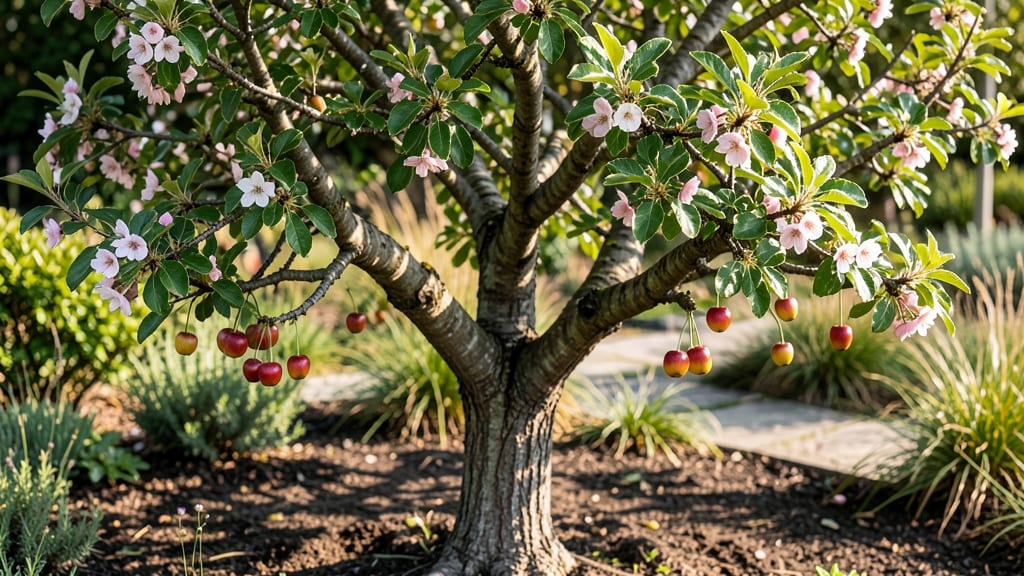
Wondering how tall do crab apple trees grow before you commit to planting one in your yard? These stunning trees—with their 🍎 fall color and wildlife-friendly fruit—can range from compact shrubs to towering specimens, depending on the variety and care you provide.
Most crab apple trees in USDA Zone 6a mature between 15 and 25 feet, but some dwarf varieties stay under 12 feet, making them perfect for smaller spaces.
If you're planting in spring (April-May), choosing the right size now will save headaches later when the tree outgrows its spot.
Whether you're dreaming of a dramatic focal point or a neatly pruned backyard tree, understanding growth habits is key. I’ll break down the height ranges of popular varieties and share practical tips to control growth—so you can enjoy your crab apple’s beauty without sacrificing your garden layout.
From standard varieties that reach two stories to dwarf options that fit cozy patios, there’s a crab apple tree for every space. Let’s explore how to pick the perfect fit for your yard.


Crab apple tree height ranges: mature sizes by variety
Crab apple trees (Malus spp.) are prized for their vibrant fall foliage and abundant fruit, but their mature heights can vary dramatically between varieties. While some tower over suburban homes, others stay compact enough for small yards. Understanding these differences helps you choose the perfect tree for your space.
Most standard varieties reach 15 to 25 feet at maturity, but dwarf and semi-dwarf options can stay under 12 feet, making them ideal for urban gardens.
For example, the popular Dolgo crab apple grows 15–20 feet tall with a similar spread, while the Adirondack crab apple reaches 18–25 feet—perfect for large properties. On the smaller end, Malus 'Evereste' tops out at 8–12 feet, ideal for tight spaces.
These variations ensure there’s a crab apple tree to fit nearly any landscape, whether you need a privacy screen or a focal point.
| Variety | Mature Height | Spread | Best For |
|---|---|---|---|
| Dolgo | 15–20 ft | 15–20 ft | Large yards, wildlife |
| Adirondack | 18–25 ft | 15–20 ft | Rural landscapes |
| Centennial | 12–15 ft | 10–12 ft | Medium yards |
| Malus 'Evereste' | 8–12 ft | 8–10 ft | Urban gardens |
| Sargent | 20–25 ft | 15–20 ft | Large estates |
If you’re comparing heights visually, think of a standard crab apple tree as reaching the height of a two-story house (about 20–25 feet). Dwarf varieties, like 'Evereste', stay closer to the height of a single-story home (around 10 feet).
This comparison helps visualize how each variety will fit into your yard’s architecture, whether you’re planting near a patio or driveway.
Growth rates also vary: younger trees gain 2–4 feet per year in their first decade, while mature trees grow more slowly. For instance, a 5-year-old Dolgo might stand 10–12 feet tall, while a 10-year-old Adirondack could already be 15 feet.
Patience is key—these trees take time to reach their full potential, but their ornamental value makes the wait worthwhile.
Soil and climate play a role too. Trees in rich, well-draining soil with full sun exposure tend to grow taller, while those in poor soil or shade may stay shorter.
For example, a Centennial crab apple in USDA Zone 5 might max out at 12 feet, but the same tree in Zone 7 could reach 15 feet. Always check your local hardiness zone and soil conditions before planting.
For urban gardeners, dwarf varieties are game-changers. Trees like 'Evereste' or 'Profusion' (which grows 10–12 feet tall) thrive in containers or small yards. They still produce abundant fruit and stunning fall color, proving that size doesn’t limit beauty.
Just ensure you plant them in a spot with at least 6 hours of sunlight daily.
If you’re unsure which variety to choose, consider your long-term goals. Need a privacy screen? Opt for a taller variety like Adirondack. Want a low-maintenance focal point?
A dwarf or semi-dwarf will work beautifully. Either way, crab apple trees deliver year-round interest, from spring blooms to fall foliage and winter fruit for wildlife.
Pro tip: Always check the nursery tag or plant description for exact height ranges, as some varieties can vary slightly between growers. And remember—pruning can help manage height, even with standard varieties. With the right choice, your crab apple tree will be a showstopper without overwhelming your space. 🌳
Crab apple tree height ranges: mature sizes by variety
Crab apple trees are stunning additions to any landscape, but their mature height can vary dramatically depending on the variety and growing conditions. While some tower over two-story homes, others stay compact enough for small urban yards.
Understanding these differences helps you choose the perfect tree for your space.
Most crab apple trees reach 15 to 25 feet at maturity, but dwarf varieties can stay as short as 8 to 12 feet.
The key is selecting a variety that matches your yard's size and your vision for the tree's role—whether as a privacy screen, focal point, or wildlife magnet.
🌱 Crab Apple Tree Height Comparison
| Variety | Mature Height | Growth Habit | Best For |
|---|---|---|---|
| Malus 'Dolgo' (Centennial) | 15–20 ft | Standard | Large yards, privacy screens |
| Malus 'Adirondack' | 12–18 ft | Semi-dwarf | Medium spaces, wildlife gardens |
| Malus 'Evereste' | 10–15 ft | Dwarf | Small yards, containers |
| Malus 'Red Sentinel' | 12–15 ft | Columnar | Narrow spaces, vertical accents |
The Malus 'Dolgo' variety, for example, grows to 15–20 feet—ideal for rural properties or large suburban lots. Its vigorous growth makes it a favorite for privacy screens and wildlife habitats.
In contrast, dwarf varieties like Malus 'Evereste' top out at 10–15 feet, perfect for urban gardens or small backyards.
Columnar varieties, such as Red Sentinel, grow narrow and tall (12–15 feet), making them ideal for vertical spaces like narrow side yards or along fences. These trees maintain a compact footprint while still providing the ornamental benefits of traditional crab apples.
If you're unsure which variety to choose, consider your yard size and long-term goals. A standard variety may overwhelm a small space, while a dwarf or columnar option could feel too underwhelming in a large landscape. Balance aesthetics with practicality!
For maximum control over height, opt for dwarf rootstock or regular pruning. Even standard varieties can be kept smaller with proper care, ensuring your crab apple tree fits seamlessly into your garden design. 🌳