
How To
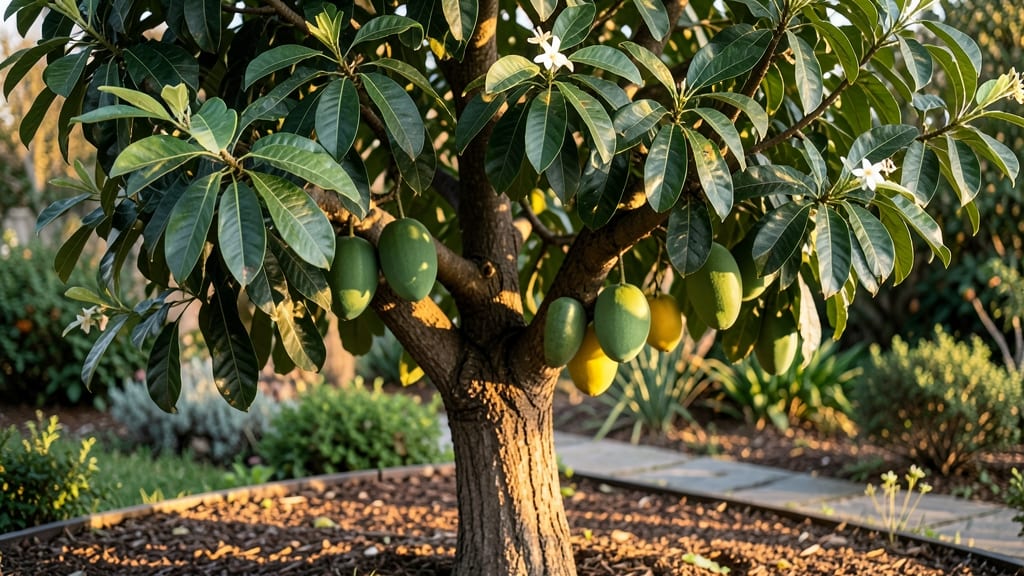
Wondering how tall mango trees grow before you commit to planting one? You might be surprised to learn that some varieties stretch toward the sky like tropical giants, while others stay compact enough for even small backyards.
The 🥭 you choose could end up dwarfing your house—or fitting neatly in a container!
Mango trees aren’t one-size-fits-all; their height depends on the variety, climate, and care you provide. A standard tree can soar 60 feet tall, while dwarf varieties max out around 24 feet.
That’s the difference between a backyard canopy and a manageable patio centerpiece. Let’s break down what to expect—and how to guide your tree’s growth.
If you’re dreaming of fresh mangoes but worried about space, don’t panic. With the right pruning techniques and variety selection, you can enjoy tropical fruit without sacrificing your lawn. I’ll show you how to balance size and productivity so your mango tree thrives—no skyscraper required.
Ready to turn your garden into a mango paradise? Stick around to discover the best varieties for your space, climate tips to boost growth, and 5 pro tips to keep your tree at your ideal height. Your future snack stash starts here!


Mango tree height ranges by variety: from dwarf to giant
Mango trees are famous for their dramatic height differences—some stay compact enough for backyard gardens, while others become towering giants that need a full acre to thrive. The variety you choose determines everything from your tree's mature height to how quickly it reaches fruiting age.
If you're planning your tropical garden layout, knowing these ranges will help you avoid overcrowding or planting in tight spaces.
For example, the 'Cogshall' variety is a dwarf mango that maxes out around 20-25 feet, making it perfect for containers or small yards. On the opposite end, the 'Keitt' or 'Haden' varieties can soar to 80-100 feet in ideal conditions—taller than a 5-story building!
Even standard varieties like 'Irwin' typically reach 50-60 feet at maturity.
Here's the key: growth rate varies too. Dwarf varieties may take 3-5 years to bear fruit, while standard types can start producing mangoes in 5-7 years. If you're impatient for harvests, semi-dwarf varieties like 'Julie' (30-40 feet) strike a balance between size and productivity.
🌱
| Variety | Mature Height | Growth Rate (ft/year) | Fruiting Age | Best For |
|---|---|---|---|---|
| Cogshall | 20-25 ft | 2-3 ft | 3-5 years | Containers, small yards |
| Julie | 30-40 ft | 3-4 ft | 4-6 years | Backyards, urban gardens |
| Irwin | 50-60 ft | 4-5 ft | 5-7 years | Large properties, orchards |
| Keitt | 80-100 ft | 5-6 ft | 6-8 years | Commercial farms, rural areas |
| Haden | 60-80 ft | 4-5 ft | 5-7 years | Subtropical climates |
Visualizing these differences helps with garden planning. Imagine a 'Cogshall' mango tree fitting neatly into a large planter on your patio, while a 'Keitt' would need an entire backyard to spread its roots and branches.
Even the canopy spread matters—some varieties grow wider than they do tall, so check the branch spread specs too.
If you're in a small-space garden, consider grafting a dwarf variety onto a standard rootstock. This technique lets you control the tree height while keeping the fruit characteristics of the variety you love.
For instance, grafting 'Kent' (a popular variety) onto a 'Cogshall' rootstock can keep the tree under 25 feet while producing Kent's signature sweet fruit.
Another pro tip: pruning young trees can influence final height. If you want a shorter mango tree, prune the central leader (main upward branch) early to encourage a multi-trunk structure. This won't stunt the tree permanently but will make it bushier and more manageable.
🌳
For home gardeners, semi-dwarf varieties like 'Julie' or 'Osteen' (30-40 feet) offer the best compromise. They’re tall enough to produce high yields but small enough to fit in most residential yards. Plus, their earlier fruiting age (4-6 years
Climate zones and mango tree growth: how heat, rain, and cold affect height
Your mango tree's height isn't just about the variety you choose—it's heavily influenced by your local climate zone.
Tropical regions like Florida or Hawaii provide the perfect conditions for mango trees to reach their full 50-60 foot potential, while cooler climates may limit growth to 20-30 feet or less. Understanding these differences helps you set realistic expectations and adjust care strategies accordingly.
In USDA Zone 10-11, where temperatures rarely drop below 30°F, mango trees thrive with minimal stress, growing 3-4 feet per year and reaching their mature height faster.
Meanwhile, in Zone 9, where cold snaps occasionally dip below 25°F, trees grow more slowly and may need winter protection to prevent stunted growth or dieback.
| Climate Zone | Temperature Range | Mango Growth Rate | Mature Height | Cold Hardiness |
|---|---|---|---|---|
| Zone 10-11 (Tropical) | 60°F+ year-round | 3-4 ft/year | 50-60 ft | No winter dormancy |
| Zone 9 (Subtropical) | 40°F-90°F | 2-3 ft/year | 30-45 ft | 25°F minimum |
| Zone 8 (Temperate) | 10°F-85°F | 1-2 ft/year | 20-30 ft | 20°F minimum |
| Zone 7 (Cool) | -5°F-80°F | 0.5-1 ft/year | 15-25 ft | 15°F minimum |
Rainfall patterns also play a critical role in mango tree height. In humid tropical regions, trees grow taller but may develop weaker wood due to excessive moisture. To counteract this, I recommend pruning lower branches to improve airflow and reduce fungal risks.
In contrast, drought-prone areas like Arizona or California require deep, infrequent watering to encourage stronger vertical growth.
If you live in a Zone 8 or cooler, choose cold-hardy varieties like 'Cogshall' or 'Julie', which tolerate brief cold snaps better than tropical types.
For these regions, I always mulch heavily in winter and wrap the trunk with burlap to protect against frost damage, which can stunt height growth permanently.
For gardeners in Zone 9-10, focus on pruning for shape rather than height control—these trees grow aggressively and need regular maintenance to prevent them from becoming unmanageable.
I like to prune in late winter to remove dead or crossing branches while the tree is still dormant but before new growth begins.
No matter your climate, soil drainage is non-negotiable for tall mango trees. Poor drainage leads to root rot, which directly impacts a tree's ability to reach its full height potential. Amend heavy clay soils with compost and sand to create the well-draining conditions mango trees crave.
🌱